 Today’s speaker, Sophie Flynn, told us about UNICEF, which was formed after World War 2, and was originally called the United Nations International Children's Emergency Fund. It is now officially “United Nations Children's Fund”, and is an agency of the United Nations responsible for providing humanitarian and developmental aid to children worldwide.
Sophie described how UNICEF, the United Nations Children's Fund, was created by the United Nations to promote and ensure the rights of children worldwide, especially the most disadvantaged. UNICEF's work maintains a central focus on every child - always.
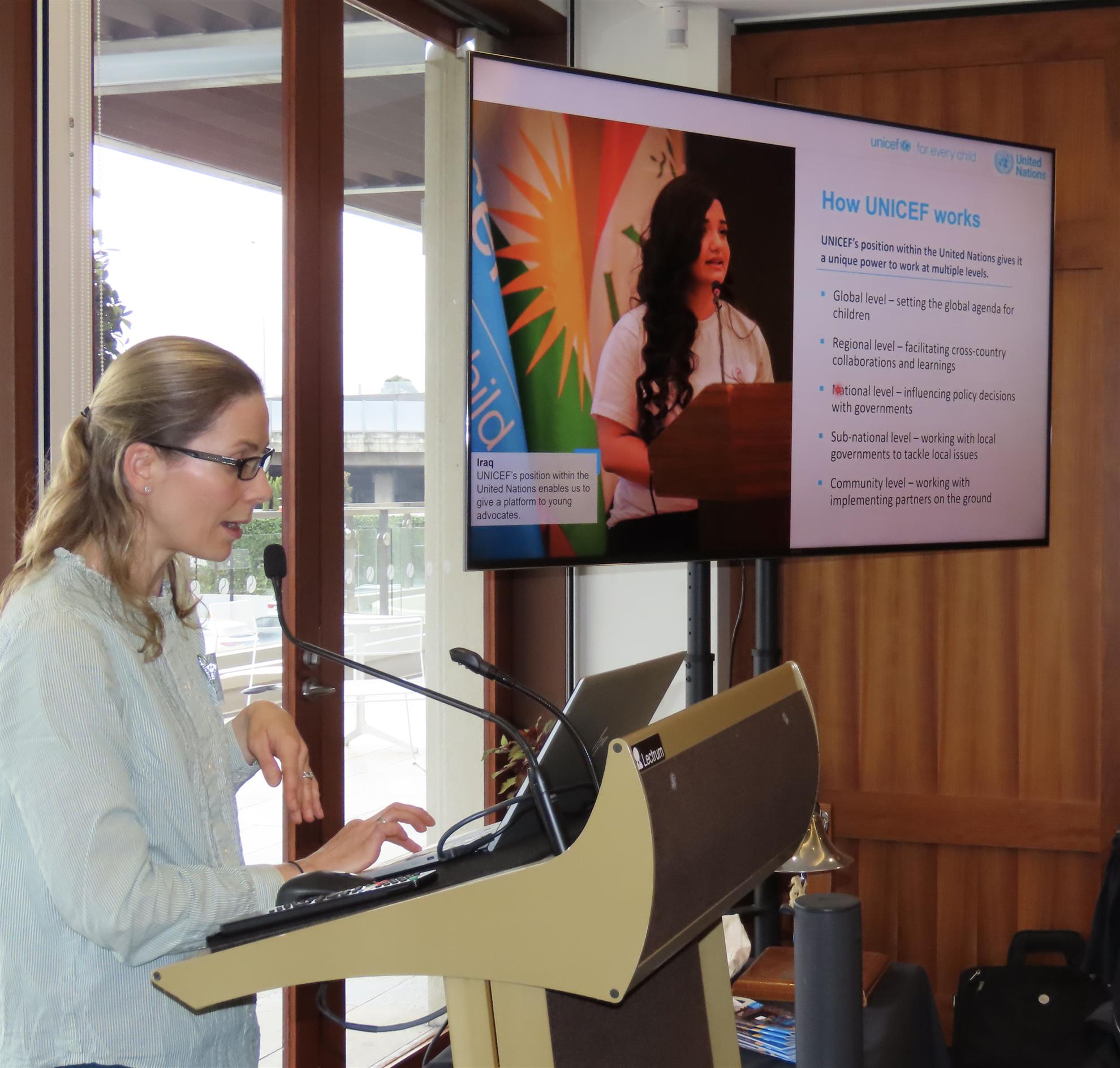 UNICEF aims, through its country programmes, to promote the equal rights of women and girls and to support their full participation in the political, social, and economic development of their communities. She described UNICEF's position within the United Nations, and how it gives it a unique power to work at multiple levels, from global down to small communities.
In describing the history and structure of UNICEF, she touched on the five UNICEF Strategic Plan 2022-2025 goal areas, involving these cross-cutting actions: humanitarian, climate, gender equality, peace building, disability and resilience.
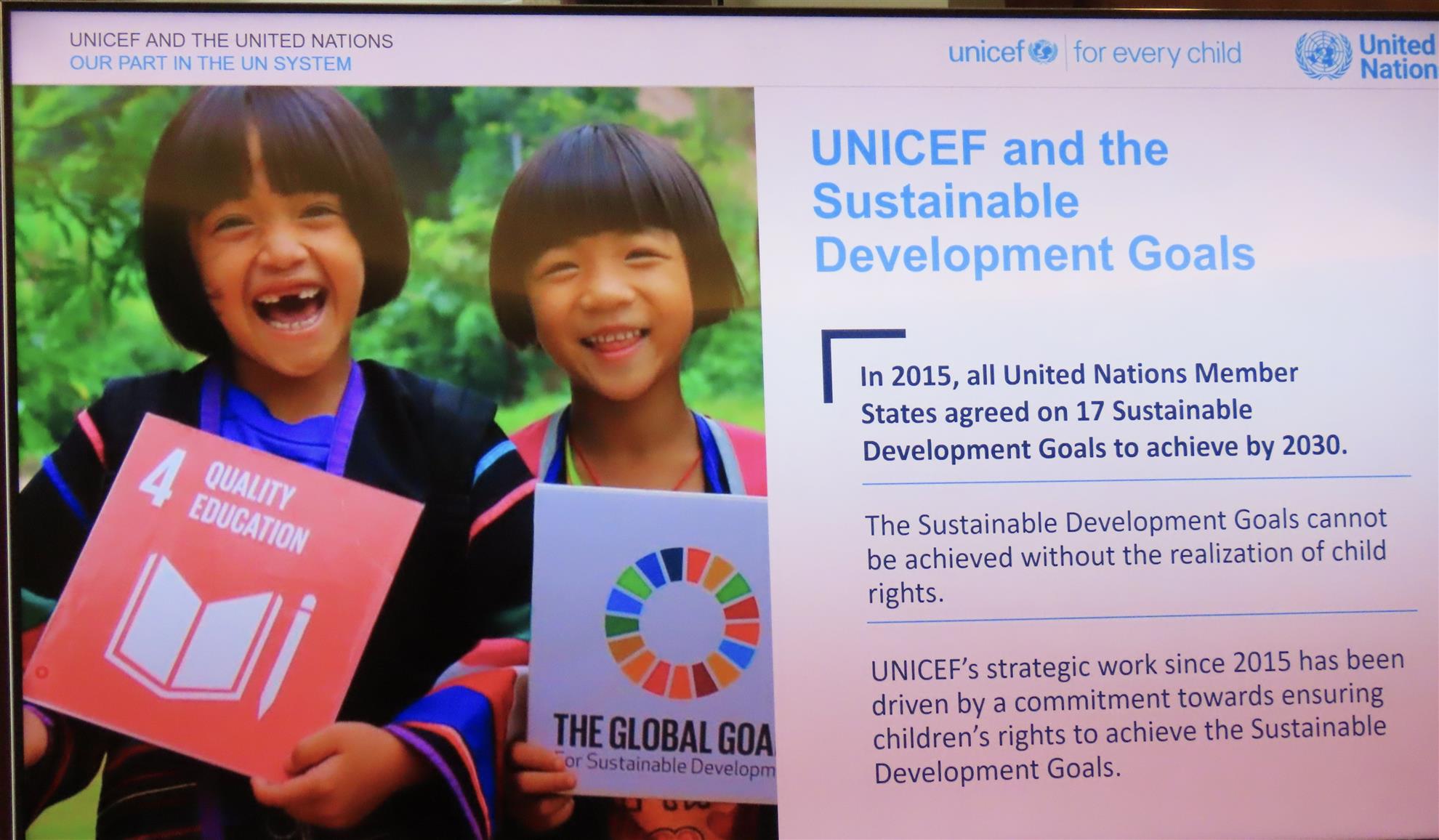
UNICEF's strategic work since 2015 has been driven by a commitment towards ensuring children's rights to achieve the Sustainable Development Goals, which cannot be achieved without the realization of child rights.
Programs are delivered in collaboration between development specialists at UNICEF Australia, and UNICEF offices in Cambodia, Laos, the Pacific Islands, Papua New Guinea, Timor-Leste as well as in Sri Lanka and Burundi.
By working in partnership, They aim to create significant lasting change for every child, no matter what.
 Sophie described how the long history of UNICEF and Rotary International working together successfully have produced a high level of mutual trust and respect.
Most notably, Global Polio Eradication Initiative where Rotary along with UNICEF and other partners have reduced polio cases by 99.9% since Rotary's first project to vaccinate children in the Philippines in 1999.
Rotary and UNICEF have worked together in many less well-known projects around the world, including Rotary Foundation Global Grant Projects.
Rotary’s Give Every Child a Future program is a USD3.9M dollar partnership between Rotary and UNICEF (Pacific) to introduce three life-saving vaccines for children and women in nine Pacific countries: Cook Islands, Kiribati, Nauru, Niue, Samoa, Tokelau, Tonga, Tuvalu and Vanuatu. This is a strong partnership which may be scaled up in future years.
 Questions from the audience elicited her own role in UNICEF Australia, where she works as a Child Safeguarding Specialist. The Program, started in 2021 to mark the centenary of Rotary in Australasia, focuses on strengthening healthcare and saving lives of children and women in the Pacific.
Sophie finally described how the performance of UNICEF is monitored.
President Doug Presented Sophie with a certificate of appreciation, recognising a donation in her name to Australian Rotary Health.