As previously advised we headed to Cape Leveque, a place that had been on our bucket list for so long.
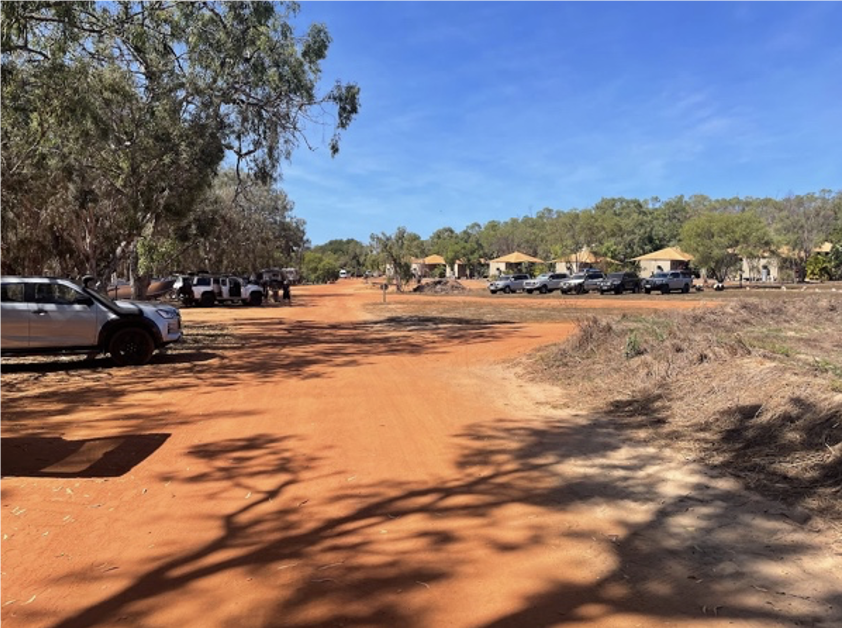
Unfortunately the last part of the road into Cape Leveque is still closed which is contrary to the advice received from the authorities but we were happy to establish our base at a commercially operated Pearl Farm in Cygnet Bay, run for the past three generations of the Brown Family. They also have an extensive area for caravans and campers mainly unpowered.
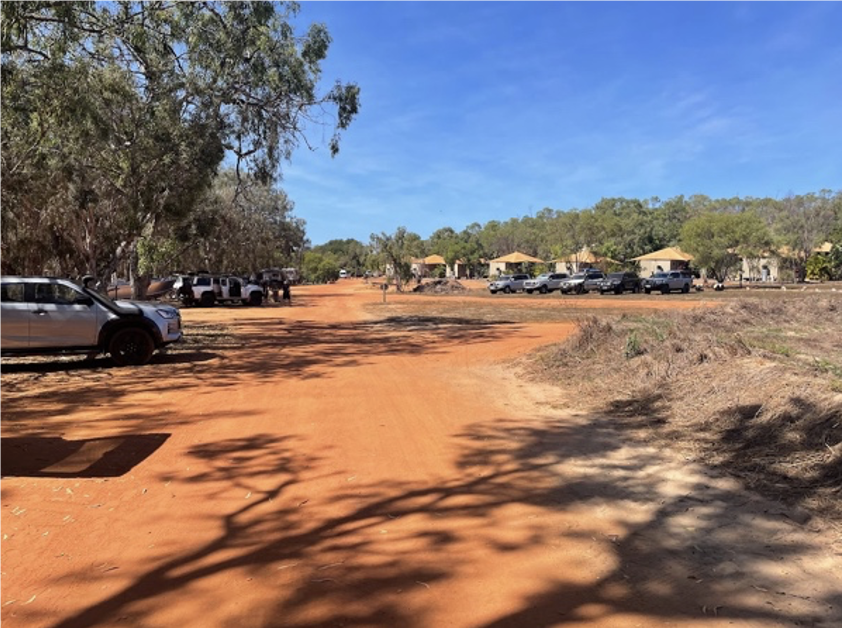 That did not deter Noel and co-Driver Marjorie as they were keen test out the Gladiator without the luxury of a powered site with mains water. You will all be pleased to know that all the off grid equipment worked extremely well once we understood the settings on the various water taps and of course the gas hot water service.
Photo: A fairly basic caravan park but the pool and restaurant were quite good.
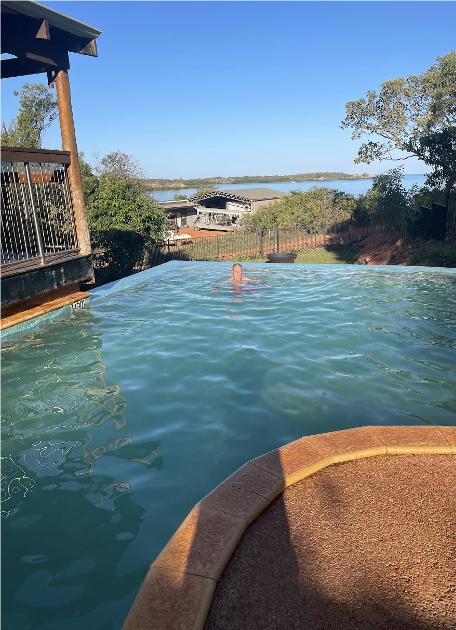
On arrival at Cygnet Bay we had a refreshing swim in the idyllic infinity pool overlooking a small beach surrounded by mangroves. We were informed that swimming at the beach is not permitted due to the presence of a “local” i.e a Crocodile.
 On return to the caravan, Co-Driver Marjorie who has reputation for being a great roaster, reached dizzy heights of epicurean excellence and ably assisted by Driver Noel produced a Lamb Roast with vegetables on the weber. If we had not devoured this magnificent creation so quickly I would have included it in a special My Kichen Rules App for your enjoyment!
I am sorry to disappoint those who have taken the trouble in the past to describe their latest degustation with photographic evidence from a society restaurant. I am not one of those “foodies” elevating their social status by flowery descriptions but what I can say this was “bloody good tucker”. We both slept well that night knowing that everything was working well, we had been fed and that Broome was being well cared for in Emmie’s control!.
This morning , Thursday, we set of to explore more of the Dampier Peninsular.
We first visited the Gambanan camp ground managed by the local indigenous community, but unfortunately there was no safe beach for swimming, although it was picturesque with many of the islands making up the Buccaneers Archipelago in the distance. The presence of crocodiles and sharks makes it hard for tourist promotion but nevertheless it was worth the visit. Tucked away in the bushland just off the road we observed a number of military vehicles and on meeting one the military personnel we were told they are constantly conducting surveillance and mapping work with the RAAF..
Great to know this as clearly we need to learn from history when we later became aware of landings by the Japanese on this Coast during WW2 Readers may be interested to know that In January 1944 , a Japanese ship, the "Hiyoshi Maru" reached the Western Australian Coast about 200klm where we are today. They anchored by the shore at about 10 am on 19 January 1944. The landscape in that area consisted of many red coloured rocks. They camouflaged the ship with tree branches. Three landing parties went ashore and explored different areas of the Australian coast in that area for about two hours. They even took some 8 mm movie footage of what they saw. As it turned out they had landed only 25 kms from where the RAAF were several weeks later to start building the now named the Truscott Airfield. The Japanese landing party spent some 48 hours in the area before returning to Timor and this is authenticated in Japanese war records. There were apparently other visits by the Japanese but these have not been verified officially.
Incidentally Bluey Truscott DFC Bar was a WW2 fighter plane air ace. He is the same legendary Melbourne Footballer who has had club best and fairest award named after him. He died in action crashing his plane off Exmouth during training manoeuvres with the U.S.Airforce
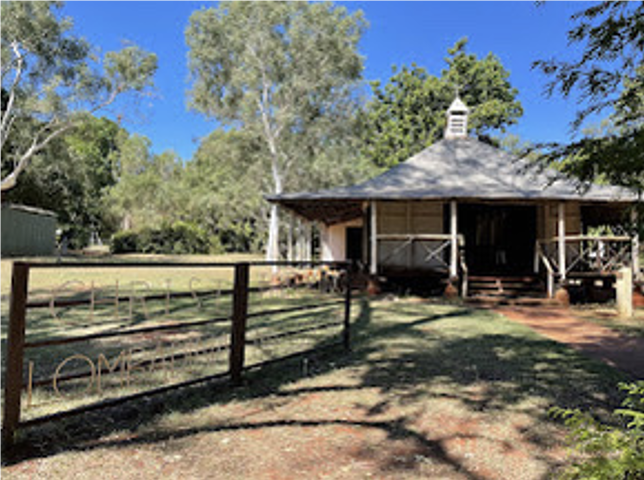
Our next visit was to was the local community settlement of Lambordina. We had heard good reports of this and what a treat it was
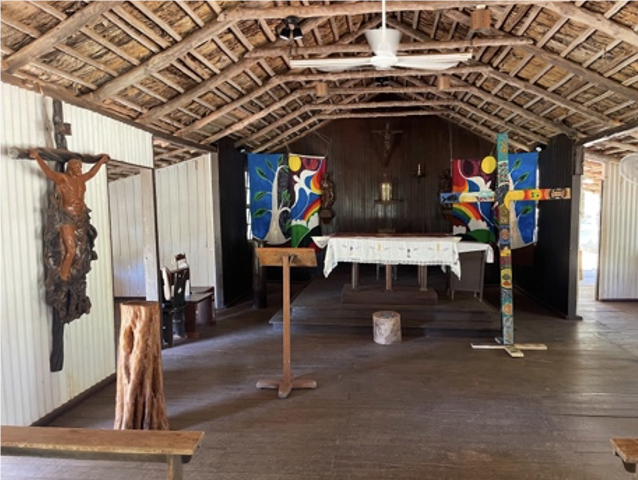
We met Marika and Tony who are proudly indigenous and run the information office which includes management of the caravan sites providing income for the community. After Katherine and Tennant Creek where we had formed a somewhat negative view of some of the social attitudes of the indigenous community, it was a pleasure to meet with Marika and Tony and tour their settlement which felt safe and had a good feel about it. The settlement had a most unusual church constructed from mangrove timber. I guess it shows that contrary to some views, Christianity through the Missions has played a very positive role in establishing social cohesion within some of the communities. I have assumed that this is a dry settlement with the Church and the School. playing an important role.
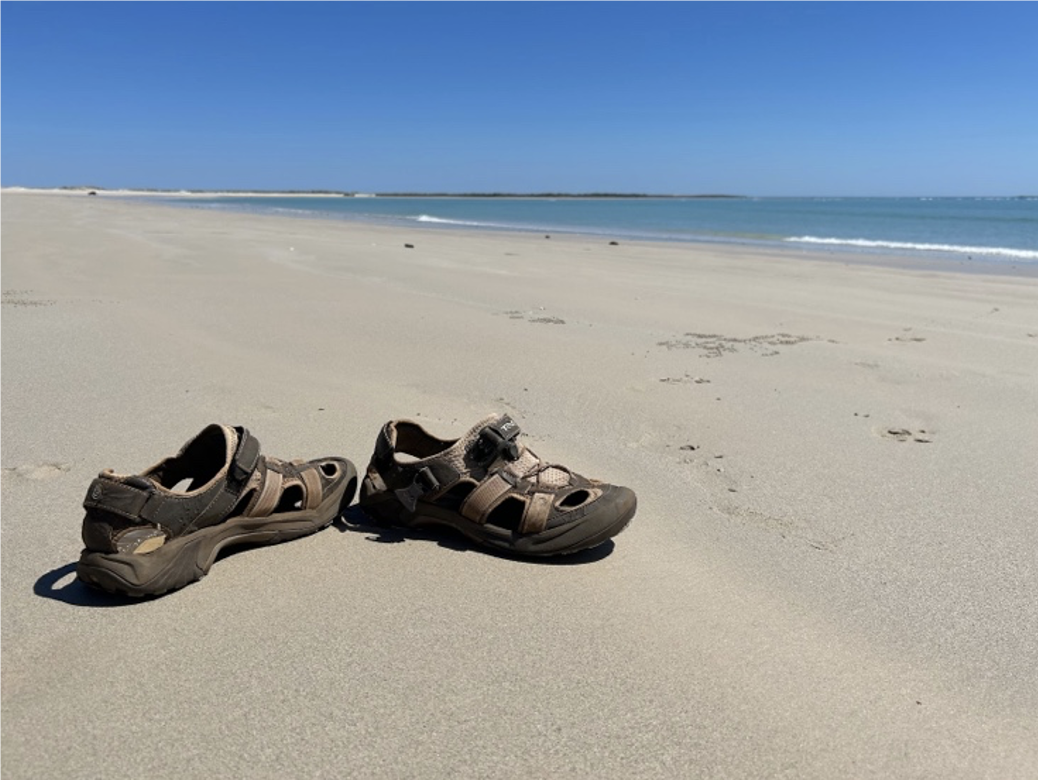
It wa the Lombadina Beach which was stunning. The sea is about a kilometer from the settlement but with the 4WD we were able to drive through the sand hills to a compacted sand beach and discover that we were one of only two vehicles, the other being about a 2 klm away.
Driving down the beach was exhilarating and you can imagine how happy Co-Driver Marjorie was even though there was a suppressed desire to hoon. The rise and fall in the tide is anything from 3 to 5 metres and if you are driving on the beach you need to keep this in mind as it changes quickly. This surely is one of the most spectacular beaches of its type in the world with its fine sand and pristine colours and warm waters.
 We had also heard that Middle Lagoon about fifty kilometres south (actually 80klms) was worth a visit. What we did not reckon on was the thirty kilometres of rough road, really rough road, to reach there, but we did make the journey after about an hour and a half. It proved to be a great location with a sheltered inlet for boat launching. It a was packed with caravans and boats, and is best described as a fisherman’s paradise.
Today we saw three very different locations on the Dampier Peninsula all of which are attractive but Lombadina will always remain in our memory. Journeys such as these require constant attention to tyre pressures and that means lowering the pressure to as low 22 psi for beach driving and then increasing it to 35 + psi for normal road travel. This is a pain, but has to be done because a breakdown way out here is $1000 dollars per wheel!
It would not surprise our readers to learn that we were very tired after the 200klm round trip. The Isuzu performed well in all terrains, but I am pleased we spared the caravan the rough road journey.
Further updates will follow.
On Saturday we left Cygnet Bay and Cape Leveque for our return to Broome after dining out the night before at the site restaurant.
It was nice to be waited on and the meal was of a good standard, but could be described as gigantic. Once again I will spare you of the photographs as I needed a wide angled lens to appreciate the size of the serving! I suspect their anticipated numbers were down and as we were the second sitting the portion control went out the window. Being weighed down by generous proportions of barramundi and calamari we headed home to the Gladiator.
There was concern that the snore meter may be off the Richter scale which can have a direct impact on then MSI but I am pleased to say both the Driver and Co – Driver slept well and were ready for an early departure the follo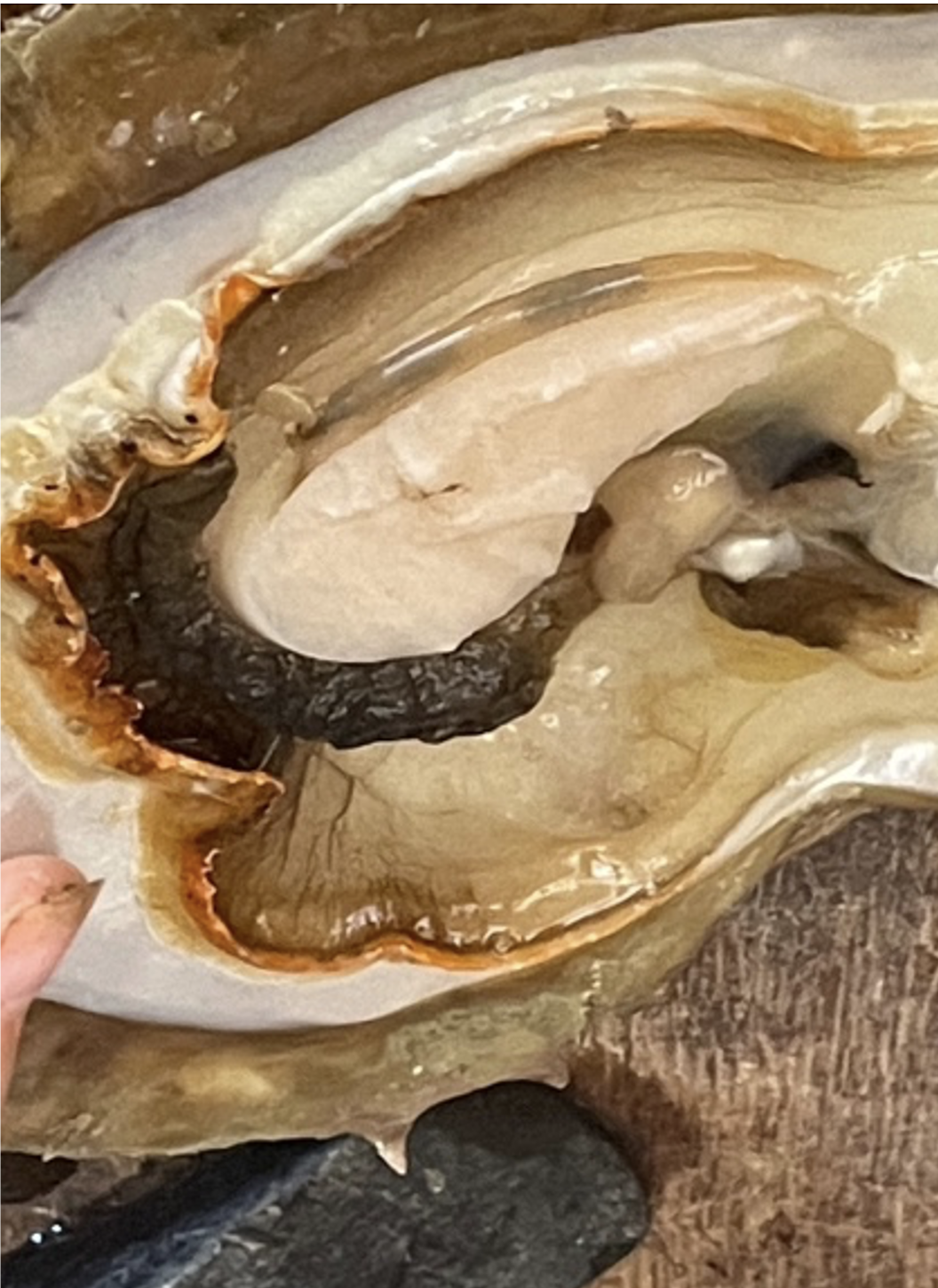 wing morning.
Earlier that day I decided to register for the tour of the Pearl Farm. I must say the tour was really interesting and I had no prior appreciation of just how technical the industry is. The early days of pearling in this area were brutal and I strongly recommend readers research this, particularly if they are considering a trip up here. I learnt it takes up to seven years for the Mother of Pearl shell to develop a commercially sized pearl but through the development of the technology the yield rates are now much higher. The process starts with a small piece of foreign matter placed in a mother of peal shell which starts the journey in tanks before being transferred to the sea in specially designed cages a year or two later. The nucleus is enveloped by a substance produced by the shell and from this nucleus the pearl may form. These shells are washed to remove any parasites or harmful bacteria twelve times per year so you can imagine it is quite labour intensive. I also learnt that the shells provide a haven for a variety of small crabs which provide natural protection from some of the harmful bacteria.
We met with a number of the staff on site many of whom have completed a degree in mari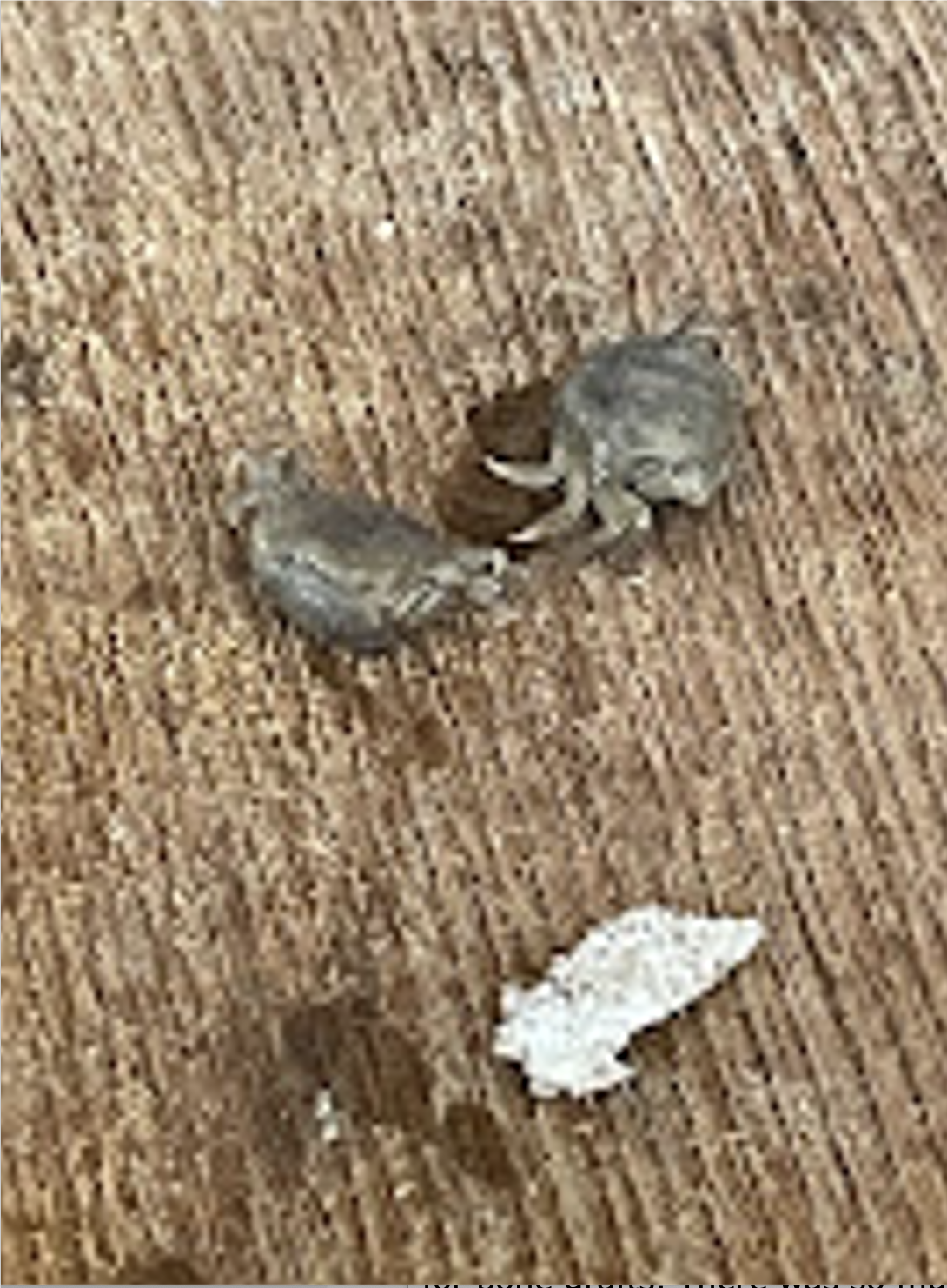 ne biology and are now experiencing the hands on aspect of the industry. Australia has a relatively small portion of global production but it is in the top 2% for quality and therefore commands higher prices. It is an industry that is subject to extreme peaks and troughs in demand therefore every effort is being made to expand the market by seeking other uses of the mother of pearl.
Without spending too much time on describing this most interesting tour it was revealed that in addition to the industry providing pearls for fashion it also supplies products for paint, pearl meat, a delicacy particularly in Asia, as well as material for bone grafts. There was so much to take in on this tour suffice to say it made me appreciate the commitment undertaken by the Brown family who founded the Pearl farm three generations ago and now provides employment for those with very unique skills.
Photos: The beginning of the pearl production line. and Mini crabs hosted by the Mother of Pearl Protecting the pearl development.
We started our two hundred klms journey back to Broome which took in a stop at Beagle Bay which has a unique church with extensive use of shells adorning the alter. The settlement itself was less attractive than Lombadina and I have never seen so many wrecked cars just rusting away in front yards in a somewhat depressing settlement. As I said in an earlier edition Beagle Bay was named after the ship which mapped the coastline and was the ship on which Charles Darwin travelled before writing The Voyage of the Beagle – The Origin of the species.
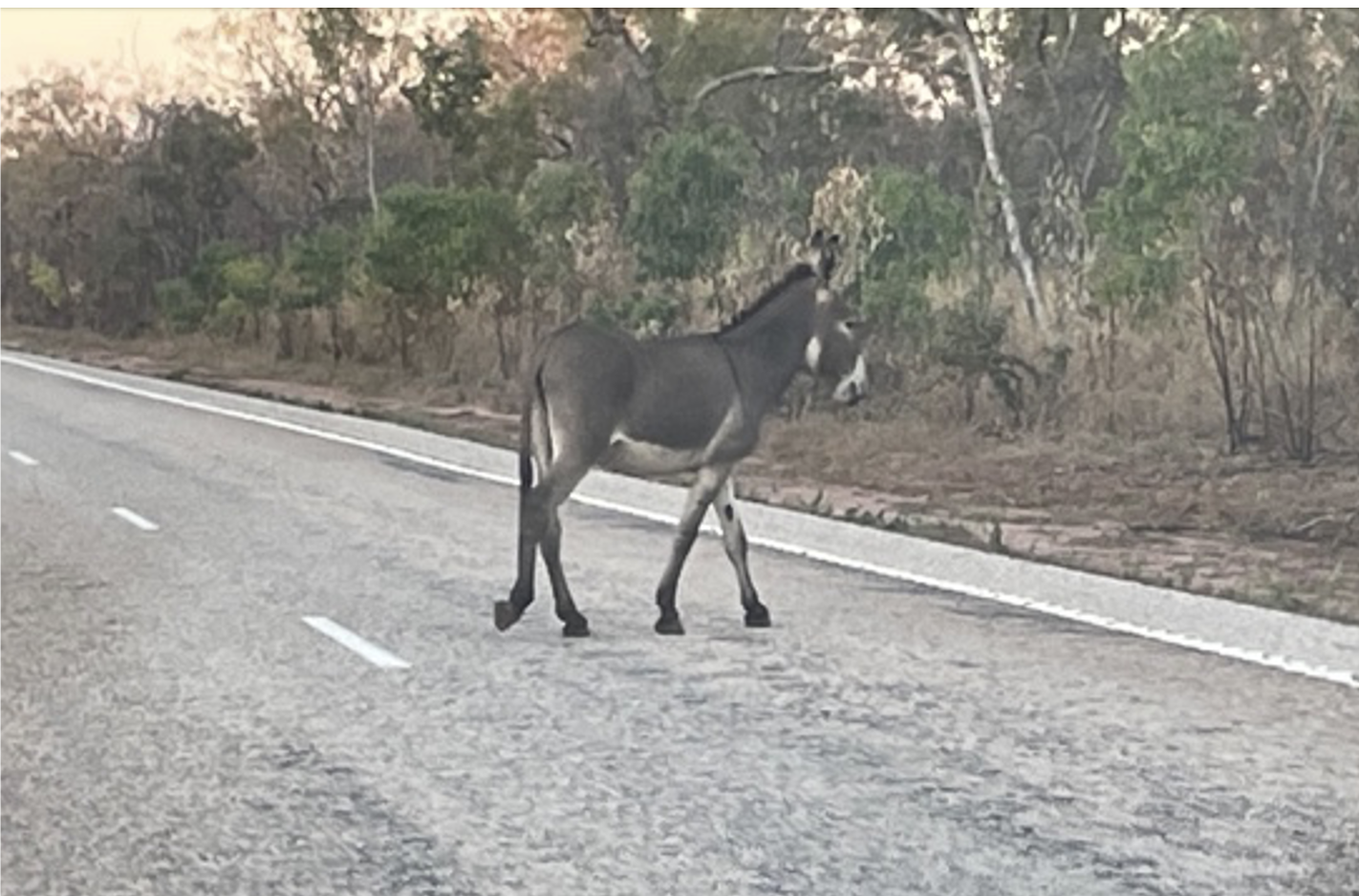 Having travelled over 5000klms across the continent I note there has been very little sign of natural wild life. We have not seen one kangaroo, no emus, or any other life other than road kill. What we have seen however is a considerable number of introduced species living in the wild including camels, wild horses, and surprisingly, donkeys. Co- Driver Marjorie had a very close encounter when the donkey decided to cross the road but fortunately the Main Driver spotted it in time.
We managed to make it back to Broome, without the donkey on the bull bar, in time for us to satisfy Co-Driver Marjorie’s need for speed at the local dirt track speedway meeting.
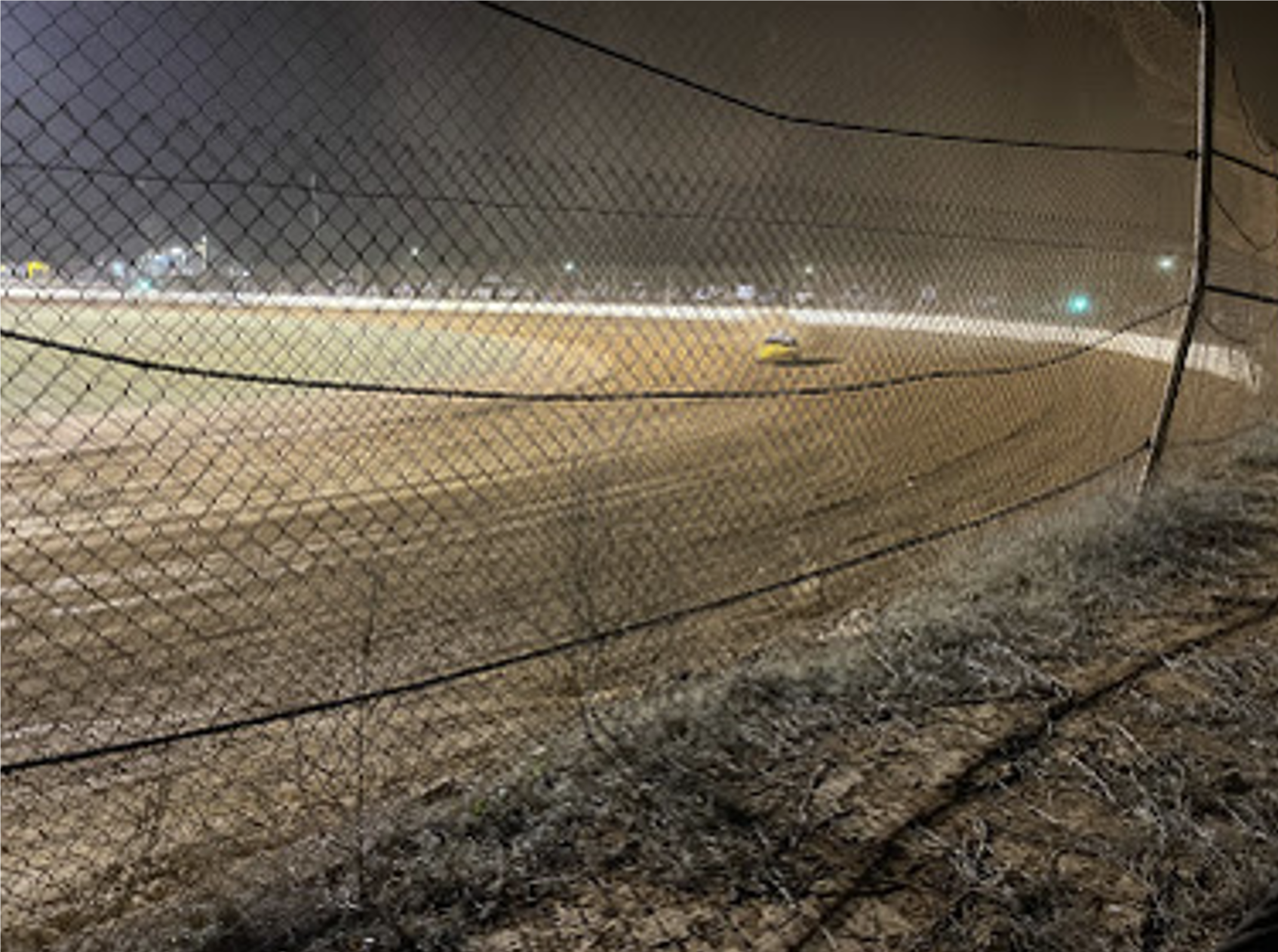
 She was in speed heaven as we were subjected to a deafening V8 rumble noise quite contrary to the decibel limits imposed on Phillip Island race track. It was fun, but what was not fun was watching Melbourne on my phone screen being robbed by a dreadful umpiring decision in the last minute of the game. We even had a programme as we mixed with Broome society. Being sprayed with dust, clumps of red mud did not phase us. I wish I could upload the video but it is too big,
 One other observation before I go: - The quality of roads up here, particularly north of Broome is exceptionally good and the cost of construction can be hardly justified because of tourism alone. I believe that governments see potential for further mineral development but I suspect that national defence plays a major part in decisions relating to the development of the road network.
We are closer to Asia than Canberra up here.
Thanks for your comments and it is nice to know that you are enjoying our journey