Rotary Hawthorn’s Important Role in the Rejuvenation of Fritsch Holzer Park
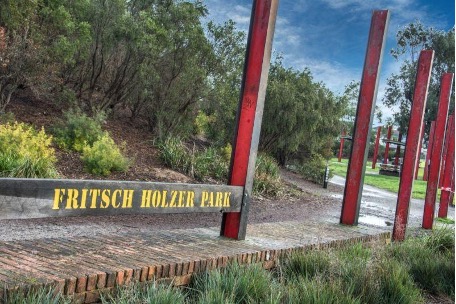
Take a stroll around the gravel walking track, have a picnic, or join the many locals who walk their dogs through this popular native setting. Fritsch Holzer Park features Australian native plants and is a great spot for picnics and dog walking.
The Fritsch Holzer Park was named after Augustus Fritsch and the Holzer brothers who formed the Upper Hawthorn Brick Company in 1883. Council bought the area in 1972 and used it as a landfill site until 1986, then as a temporary waste transfer station until 1989.
Council, together with the Victorian Government and the Rotary Club of Hawthorn, reconstructed the area into a park in 1995.
. 
The Fritsch Holzer Park Project was a joint venture project based on the Commonwealth Government New Work Opportunities program. This venture was between Rotary Hawthorn, DEET (Federal Government Department of Education, Employment & Training) and the new City of Boroondara.
Rotary Hawthorn applied to DEET to undertake this project in February 1995, and after proceeding through the primary and secondary phases of the application process, funds were awarded to Rotary Hawthorn in May 1995.
The new development was ultimately to include:
• Landscaping; planting, grassed areas, playing fields
• Multi-use pathways; including pedestrian, cycle, and fun and fitness tracks
• Picnic areas with barbecue facilities
• Children’s playgrounds
• Public amenities
• Wetland conservation area
• On-site historical display of area history (old quarry etc)
• Public lighting and irrigation systems.
. 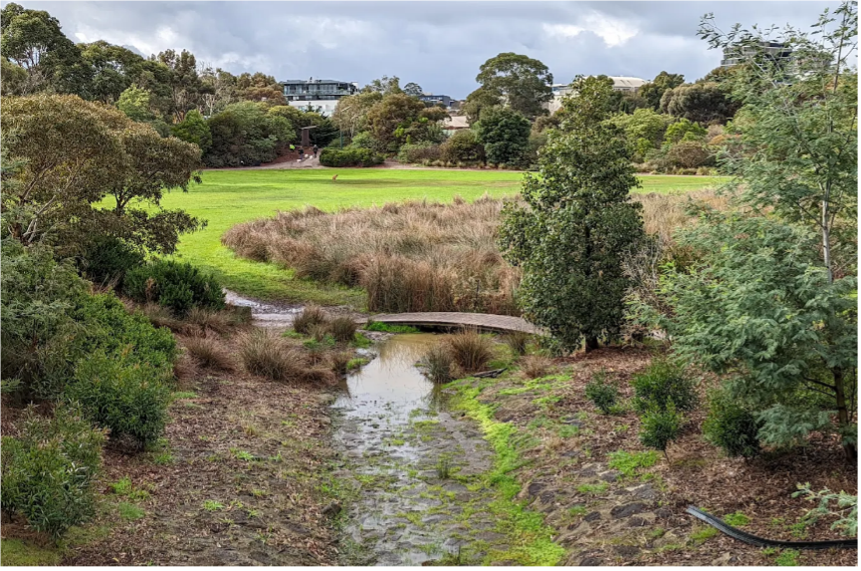
Photo Supplied by Karl Bennett for Fritsch Holzer Park
Because of Rotary Hawthorn’s role initiating this project, PP Ian Warren was invited to represent Rotary on a special community committee whose charter was to oversee the development of the park.
Through that committee, Rotary Hawthorn was publicly acknowledged as being responsible for mobilising the project and creating the financial capacity and management arrangements.
This project would not have proceeded for some years had it not been for the Club's involvement.
The project engaged 12 long term unemployed who were interviewed by the Club and then provided with both work and skills training during their six months of project work.
Federal funding conditions required that participants receive formal training for at least 25% of the time. Ian Warren negotiated with Burnley Horticultural College in nearby Richmond to provide an appropriate formal training program.
Rotary Hawthorn also provided other vocational training, including job interview skills, preparation of personal resumes, and motivational programs.
The first phase of the Fritsch Holzer Park project was completed Christmas 1995.
. 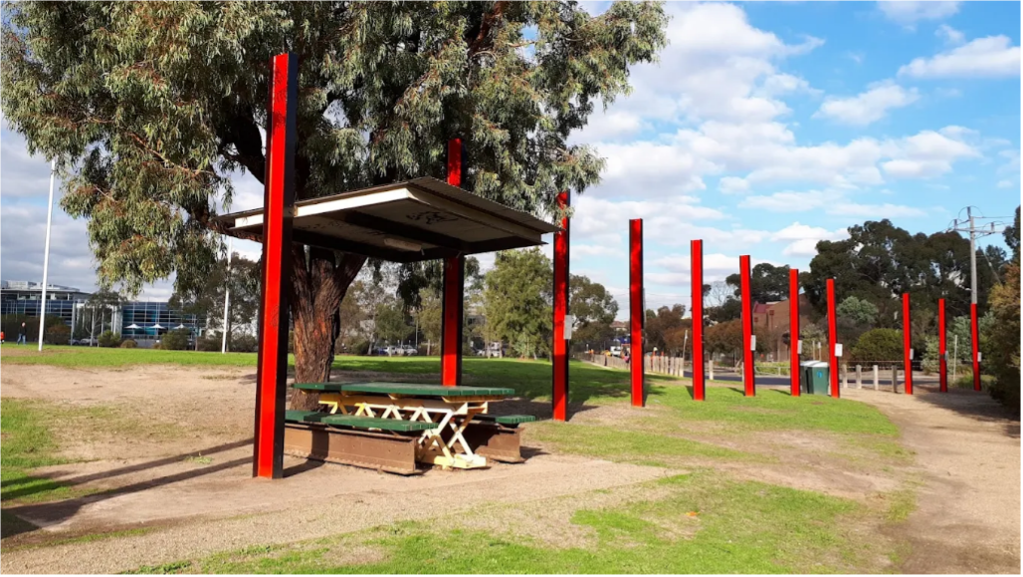
Photo Supplied by Maria Ngo for Fritsch Holzer Park
All participants were provided with a "job seekers kit” with an individual reference from the City of Boroondara and Warren & Rowe (as project managers), and a personal curriculum vitae.
The success of this project was not only measured by the completion of new urban infrastructure. More importantly, it was measured in the context of unemployed people who received a new purpose in life, a reason to get out of bed in the morning, a rekindling of their dignity and self-esteem, and a new sense of financial self-sufficiency and independence.
Twenty-two years later in 2018, Rotary Hawthorn held a tree planting day, attended by 200 local citizens.
Editor’s Note: Maybe we need to revisit Fritsch Holzer Park for another rejuvenation?
.
Photo Supplied by Maria Ngo – Fritsch Holzer Park