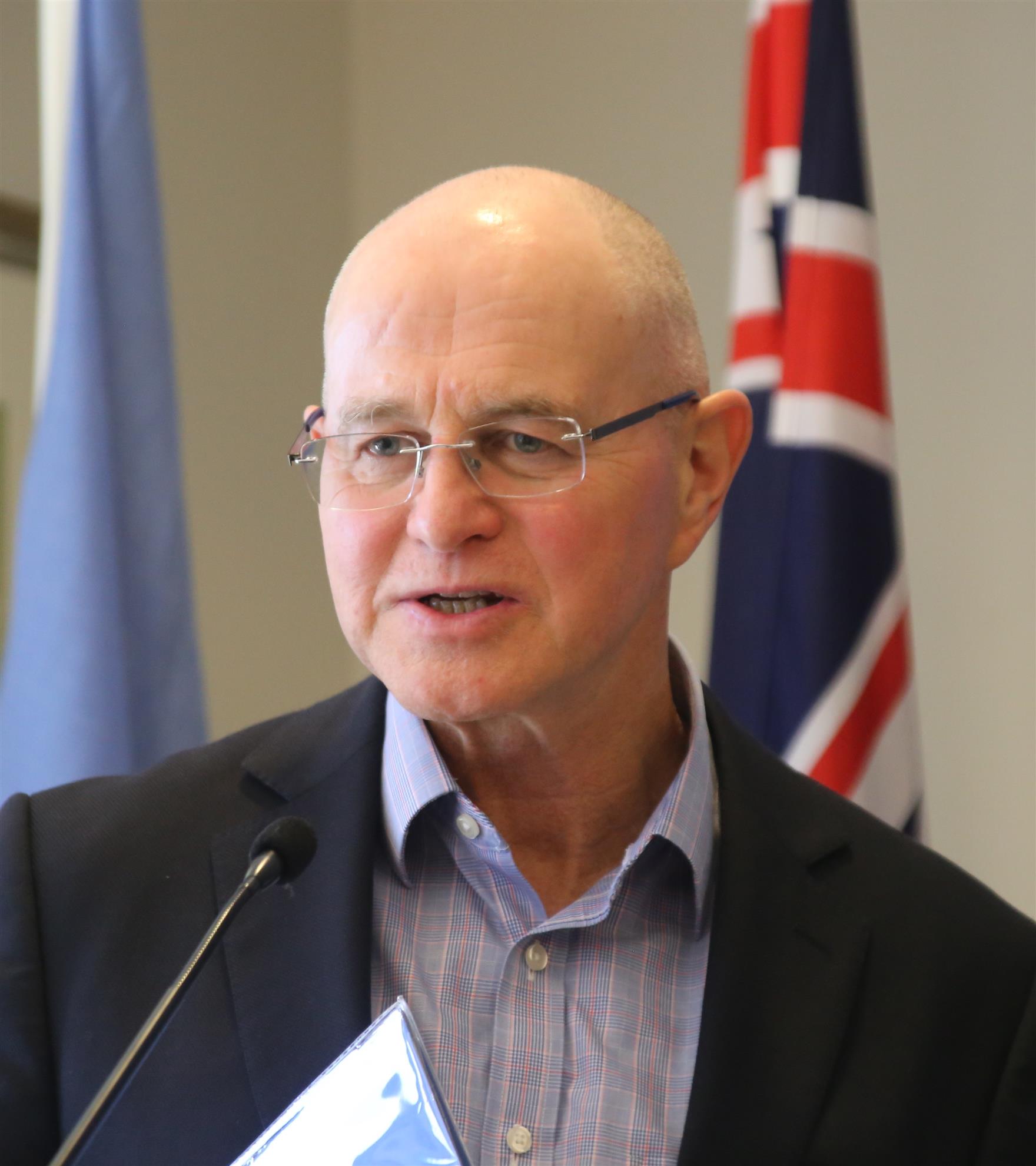
 Professor Phil Dolan rose to the challenge of condensing a twelve week University course into twenty minutes, which in turn was a challenge for our members to absorb.
The questions following Phil’s talk suggested that most of us had gained some insight.
Following Doug McLean’s introduction, Phil started his talk with some examples of creative thinking:
During th e filming of “Jaws”, Director Steven Speilberg couldn’t get the prop shark to move convincingly. So in the early film shots he only included glimpses of the prop, and relied on the threatening concept of a hidden shark and a scary sound track to represent the missing image. Once the prop was working correctly, it was included in the later shots.
At a Girls School, the pupils had been leaving lipstick marks on the mirrors for fun, and the teachers were unable to get them to stop. A school cleaner offered to get them to cease the practise: he got a group of girls to come to the toilet area to see the problem, and quickly fixed it by asking “You see how difficult these mirrors are to clean?” He then dipped his brush in a toilet bowl and brushed the mirrors. Problem solved.
Phil compared two hand he ld “cutting edge” solutions: The stone axe and the computer mouse, both fit nicely in the hand, but one lasted over a million years and the other certainly will not. Steve Jobs invented the computer mouse as he realised computers were too difficult to use if commands had to be constantly typed in. The mouse points and click to shortcut these commands.
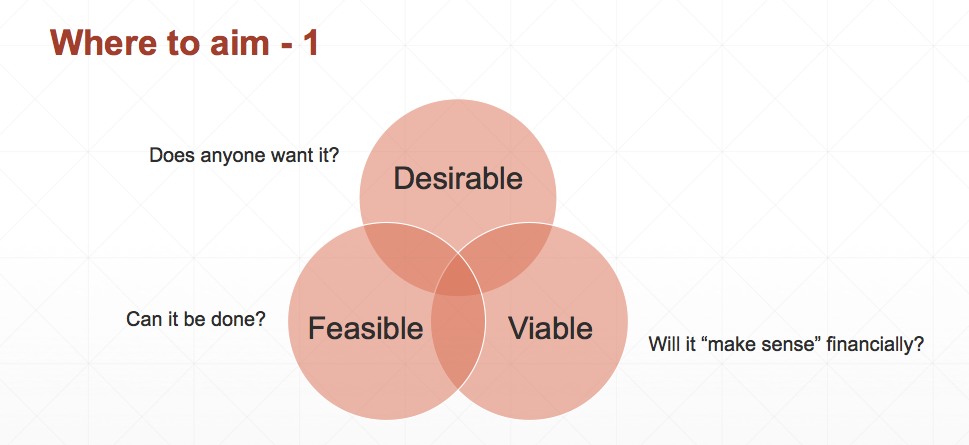
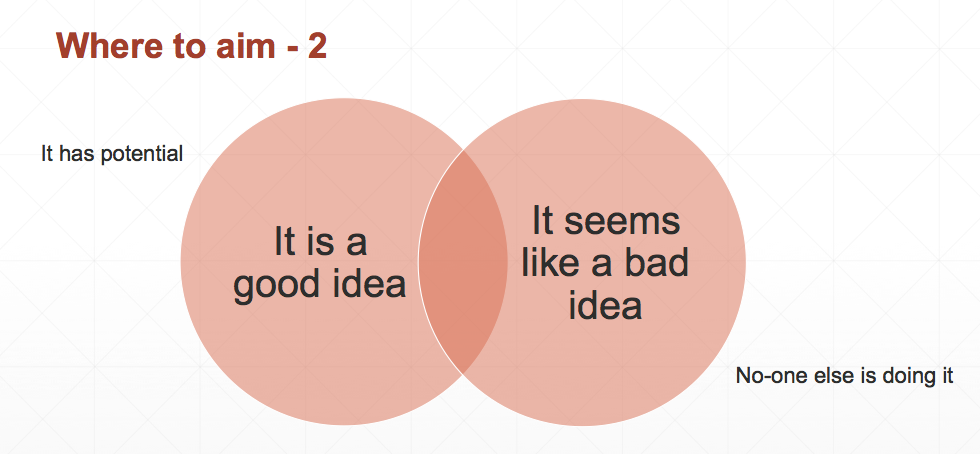
He presented us with the acronym "SCAMPER" to cultivate creativity, and provided examples of each:
Substitute (one part for another, one use for another, etc). Consider substitution of things, places, procedures, people, idea, emotions, rules. Eg, Substitute a fixed upper on hiking boot for an interchangeable one, as the sole typically wears out first, then the whole boot is thrown out. Make re-soling trivial.
Combine (parts of multiple products or services). Eg, a drone plus a 3D printer. Can fly to remote location, then print necessary items. Combine clothing and medical sensors. Was done with the “Smart Shirt” now used in some US combat troops, to report medical condition of wounded to hospital base. Combine small bandage with sticky tape and get bandaids - first marketed by sending free samples to the Boy Scouts, whose parents saw their usefulness.
Adapt (existing product, service or customer need to a new one. What can I adapt or incorporate from elsewhere? - eg refitted shipping containers have been turned into medium density housing. In the 1950, the Jacuzzi brothers were selling water pumps for use on farms. They adapted one to a whirlpool bath for their cousin's arthritis. Or adapt the play Hamlet into a musical with animals rather than people and set on the African savannah – The Lion KIng
Modify/magnify/minify (increase or reduce a product or service - would it satisfy some currently unmet need, or solve a problem) - Cirque de Soleil modified the traditional circus away from animals and towards human performers. They were ahead of their time.
Put to another use (spare bedroom to airbnb rental)? Smart ways to recycle? Airports as shopping strips and car parks, with the planes just being the way to generate customer traffic? Two property owners with vacant block between worried about loss of view if block built on. Each buys half of block, keeps view, and gets 1.5 block for larger garden.
Eliminate (what can be removed while retaining essential features - eg budget flights, capsule hotels in Japan), If it’s about a drink, take away the liquid. What might happen then? How could the product still work? (Red Bull and other energy products now come in inhaler form; Lemsip is now in a capsule as well as a drink.) - need to avoid marketing myopia - if we see ourselves as a drink company, won’t see these options. Ask ourselves what is it customers really want.
Reverse - what if product or service did the opposite to normal usage, turned inside out? What would make our customers hate us? And do less of that. Henry Ford reversed the usual assumption that people had to be brought to the work - a moving production line brought the work to the people. Problem in US with charges for checked luggage on planes, and people try to take all their stuff on with them. Causes lots of issues, ties up planes while boarding (capital costs, etc). Better to charge to take it on board and make checkin free? How would this be done? Who would complain? Why?
One of the best examples of creative thought he gave was when Ernest Hemingway entered a competition to write a moving story in six words, he wrote: “For sale: baby shoes. Never worn.” He won.
Phil urged us not to give up too quickly on our ideas, and to have a hobby to keep our minds active and creative.
Questions from members sought to find how close madness is to creativity: Phil responded with the story of Barry Marshall and Robin Warren of West Australia who challenged the orthodox medical thinking that peptic ulcers are caused by stress. They won a Nobel Prize for demonstrating that an infection is the cause.
Ian Bentley thanked Phil for his talk, which certainly gave us food for thought. Creative thought, that is.