After thanking Rotary for the opportunity for his daughter to attend the National Youth Science Forum in 2022, Professor Asten made it clear that he spoke strictly as a scientist, not as a political player.
He started his talk with a quote from Winston Churchill: “The farther back you can look, the farther forward you are likely to see.”
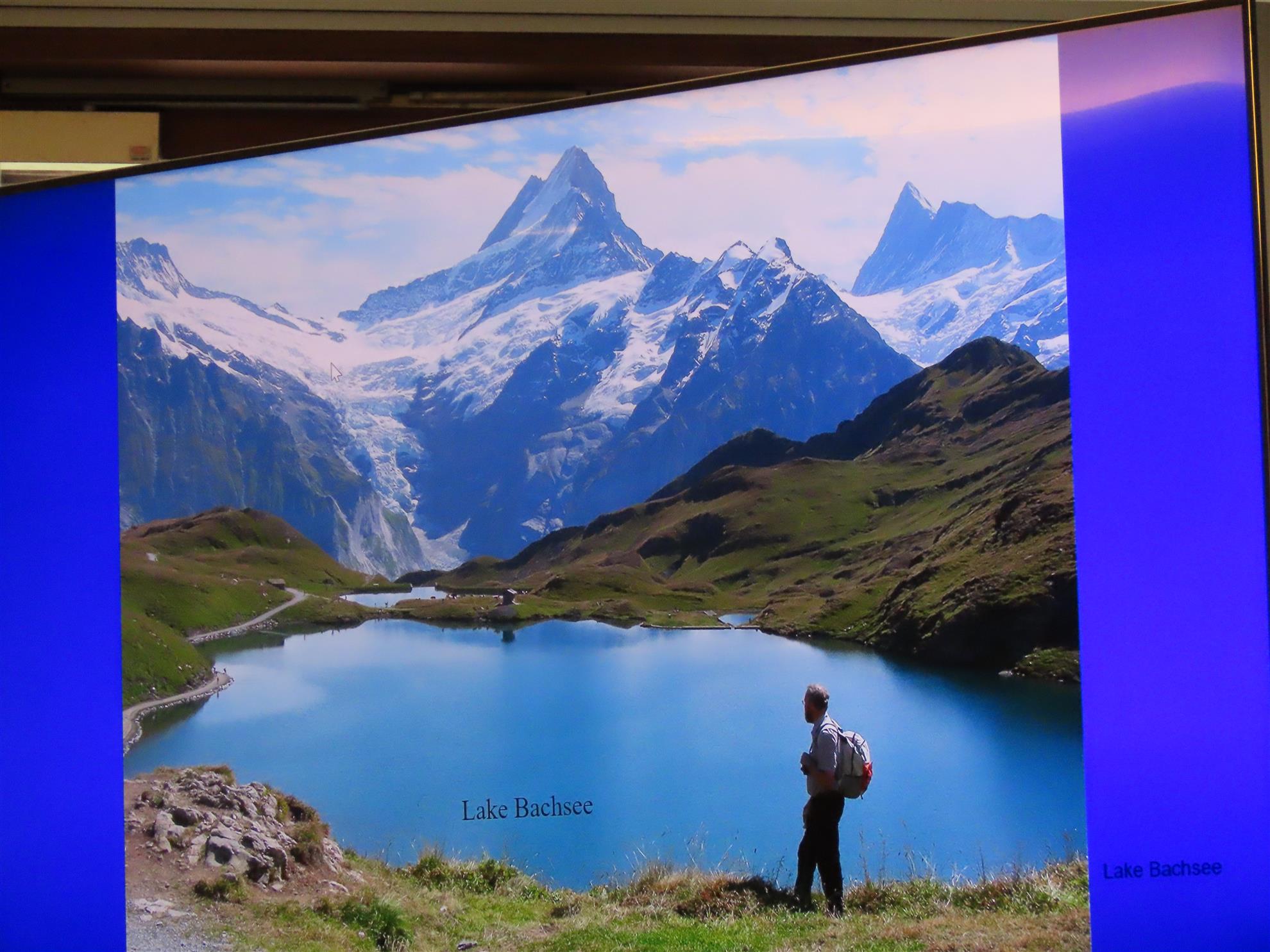 This was followed by data on the European Alps (glaciers) China, Arctic (drift ice) Antarctic (penguin population) and Global proxy data.
Describing glaciers as “rivers of ice” he showed how micro changes on the surface of boulders dropped by receding glaciers revealed their age, how a larch tree showed how glaciers have advanced and receded during cycles of natural warming and cooling.
In terms of humanity, he showed how warm periods such as the Roman and Mediaeval Warming led to prosperity and advancement (the renaissance and enlightenment), while cold periods coincided with crop failure and famine, plague, witch persecution and reduced population growth. These changes have coincided in Europe, China, Arctic and Antarctic.
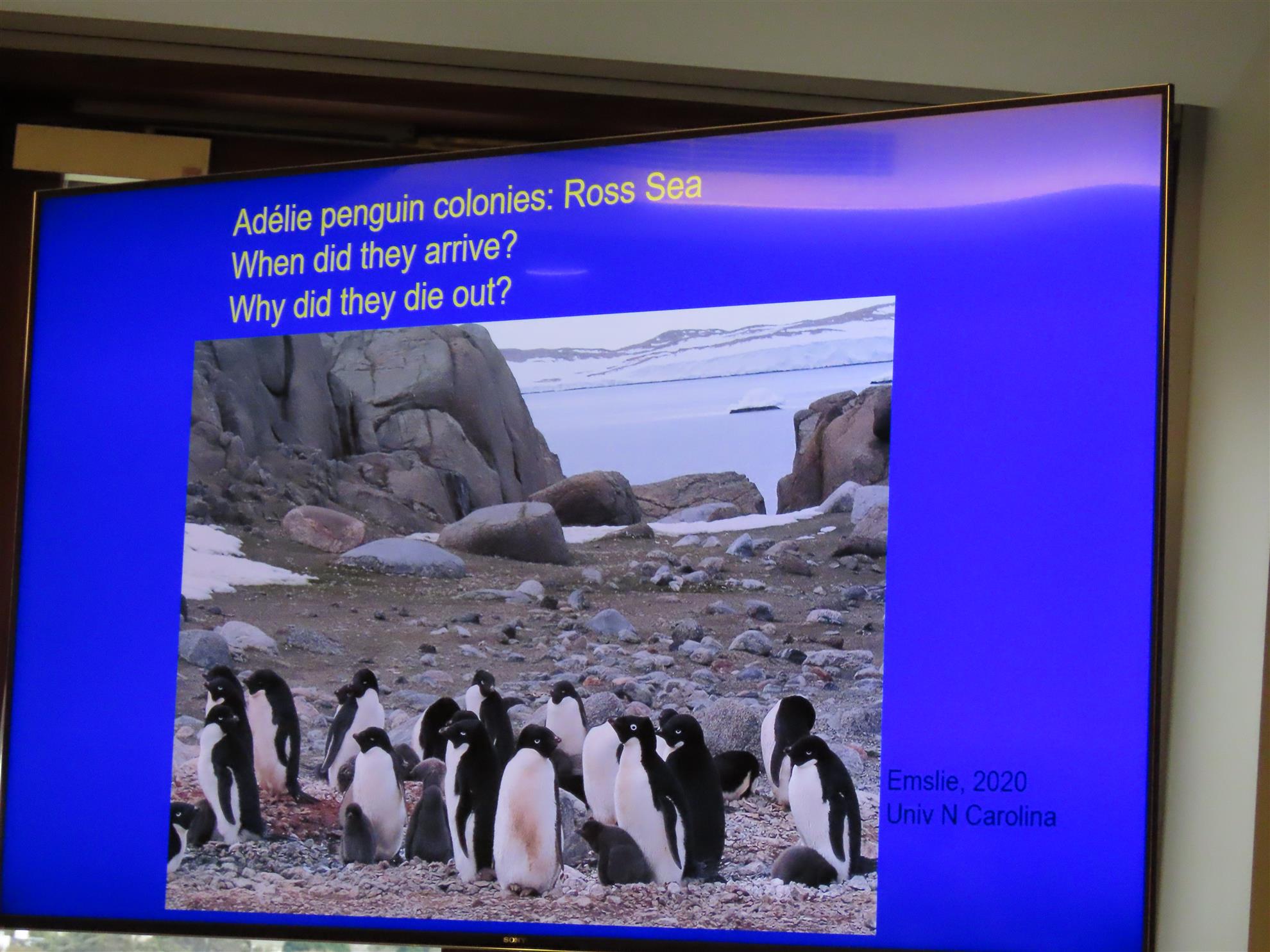 In an interesting aside he described how analysis of penguin scat revealed when Adelie Penguins arrived at the Ross Sea, and why the population rose and fell.
Quantitative study of climate cycles shows that much of the warming of the past century appears to be independent of changes in atmospheric CO2; while CO2 is a greenhouse gas and must influence global warming, the natural cycles indicate that future warming will not be solely a function of CO2. A projection to year 2100 predicts global temperature changes different from those provided by current climate models.
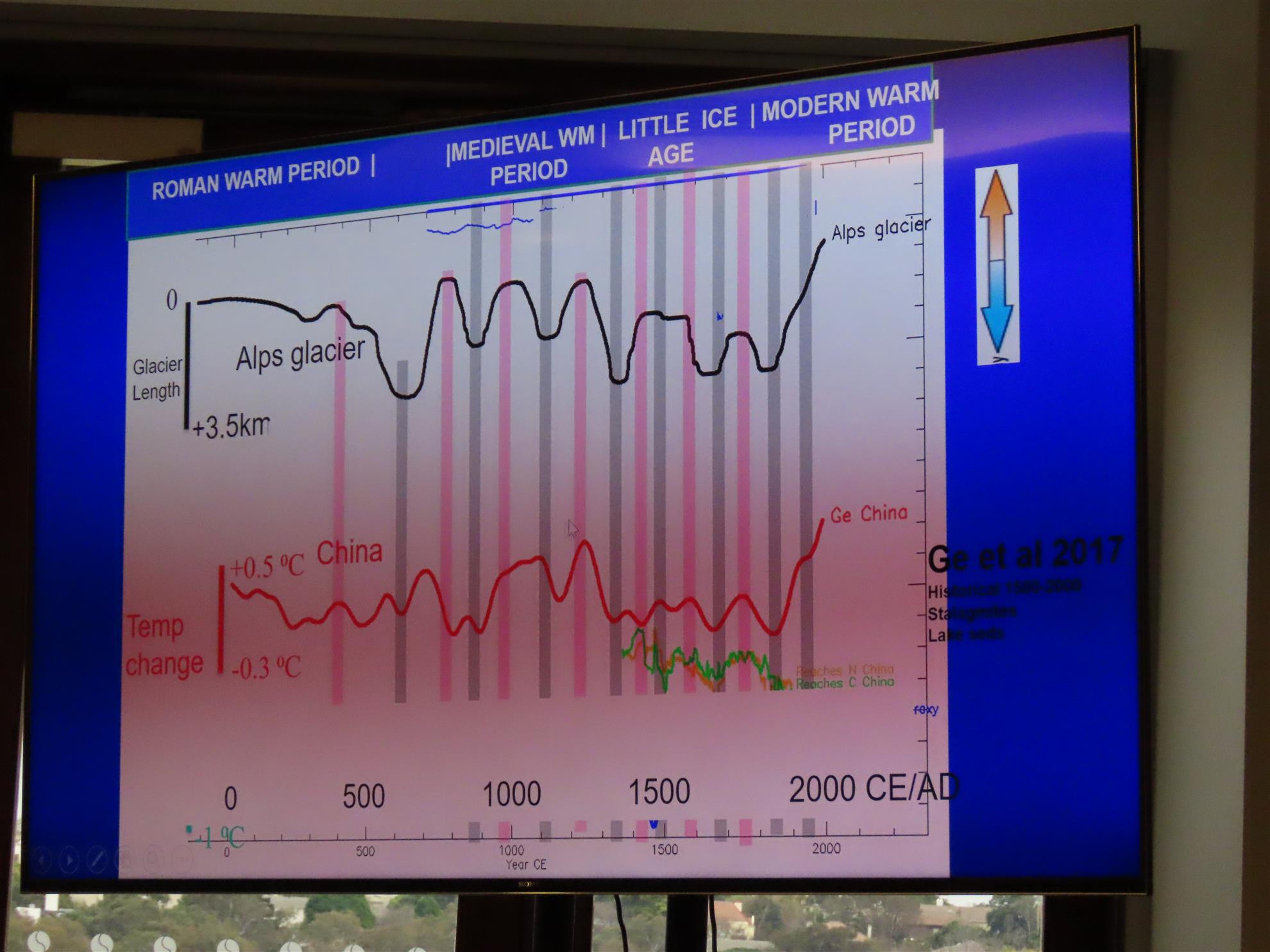 Overall, the data suggested that carbon dioxide is only a minor player in climate change, rather than the control knob of temperature, and projection of current figures suggest that by 2100 the climate should be back to what it was in 1870.
Professor Asten fielded questions from the floor relating to the scientific side of his talk, while only hinting that deviating from the accepted narrative is not helpful to a career.
M.C. Charlotte England thanked Professor Asten for his thought-provoking dissertation.
Michael Asten is a Professor of geophysics, now retired after 23 years in School of Earth Atmosphere and Environment, Monash University, Melbourne. Prior to that he was a Senior Principal Geophysicist in BHP with 18 years experience in world-wide programs of research and practice of methods for the search for new mineral resources.
In 2021 he served as an Expert Reviewer for the IPCC Sixth Assessment Report on climate change. He has published 214 scientific papers and has various research awards from the Australian SEG, BHP and CSIRO for various innovations.