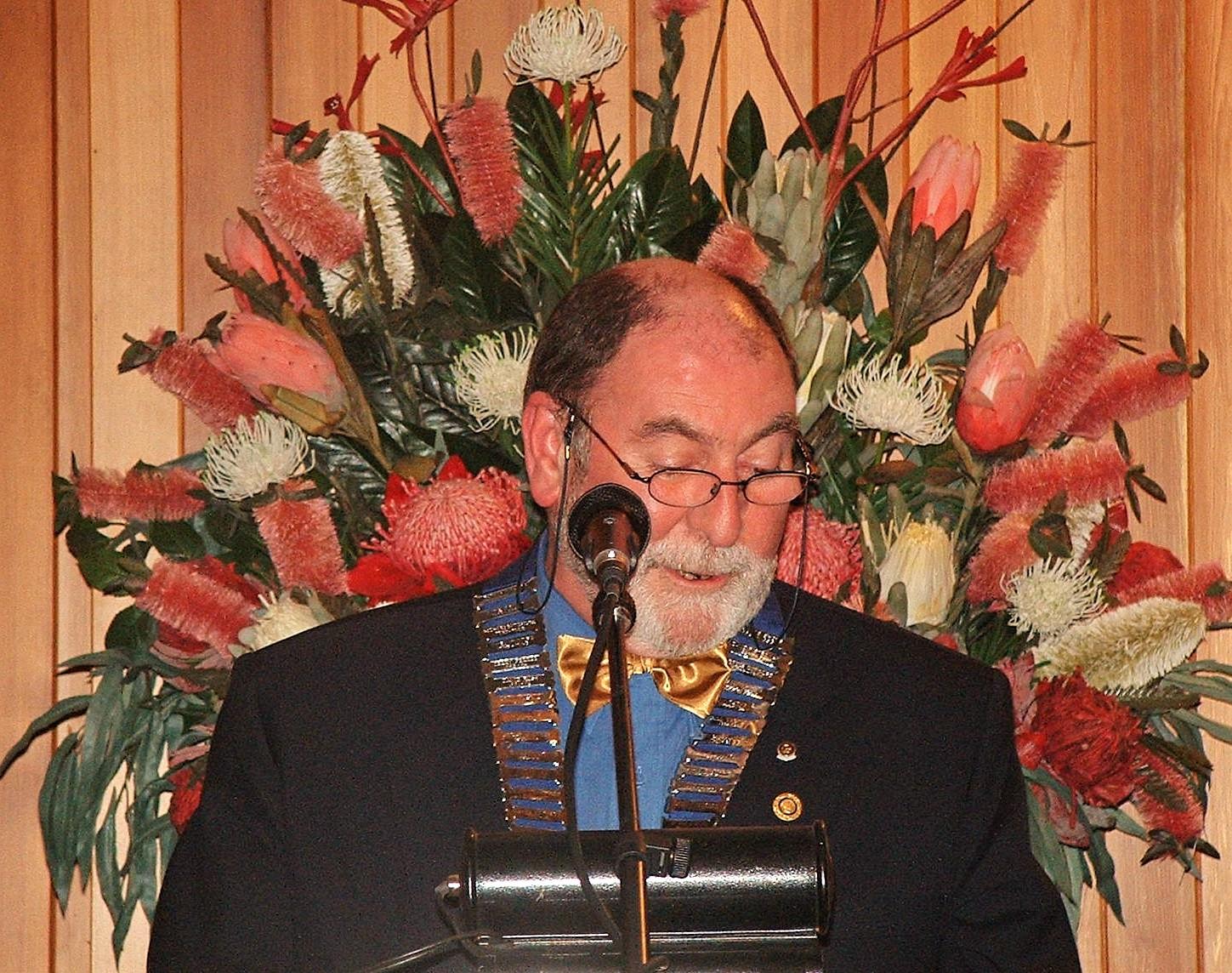
Thanks Gordon – a probing question that opens the door on a fundamental change in both Jane’s and my life.
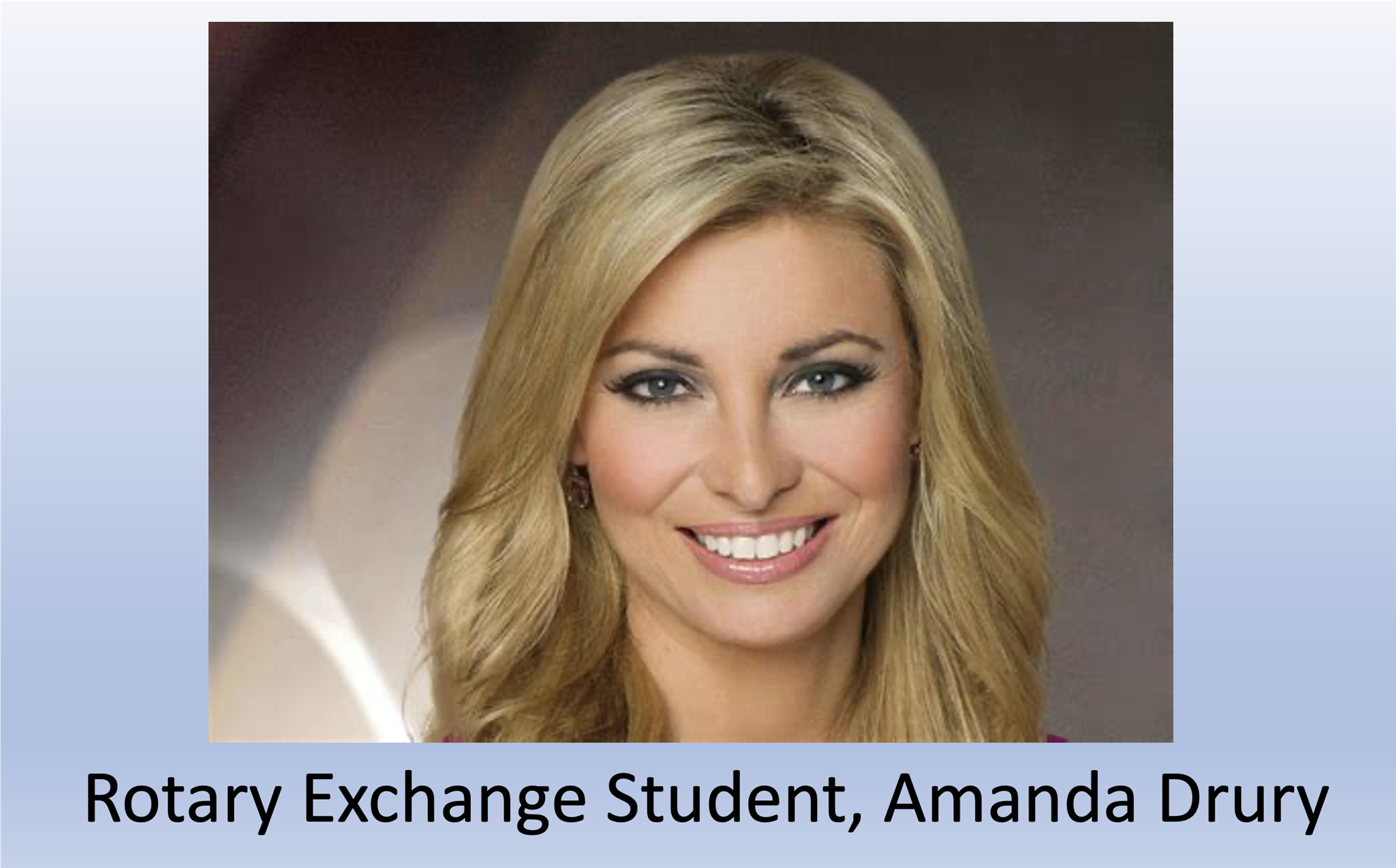 What changed was our daughter Amanda announcing in mid- 1990 that she'd like to apply for a Rotary Youth Exchange through Hawthorn Rotary. The invitation was on the school notice board, the social media of the time.
She was successful and over the next few months, she, Jane and I learnt about Rotary and what the the Exchange would involve. Our first exposure to a club meeting was here at Kooyong for the change-over from then-President David Rosback to John Carre Riddell and where well-known member Bib Stillwell introduced Mandy to the club as their outgoing student for 1991.
My interest in Rotary was now apparently enough for Charles Miscamble, then a member and still the proprietor of Polo Men’s Wear in Glenferrie Road, to offer to be my sponsor to join the club. He invited me to a lunch where I turned up wearing what I wore to work. Somewhat embarrassingly, open-neck shirts and chinos were a poorly regarded standout in that sea of conservative suits and ties. Looking around, I am now right in fashion – or the fashion has caught up to me.
You had “fireside chats” in those days where senior club members would visit your home and check out your worthiness to be a member. The best part of a good bottle of Scotch later, I and the family happily passed that test.
So on January 8, 1991, Mandy gave her farewell speech to the club before leaving for a year in Belgium, and I was inducted into the club.
So, clearly, the last 32 years have been all Mandy’s fault.
Now a bit about Clan Drury.
The Old English name 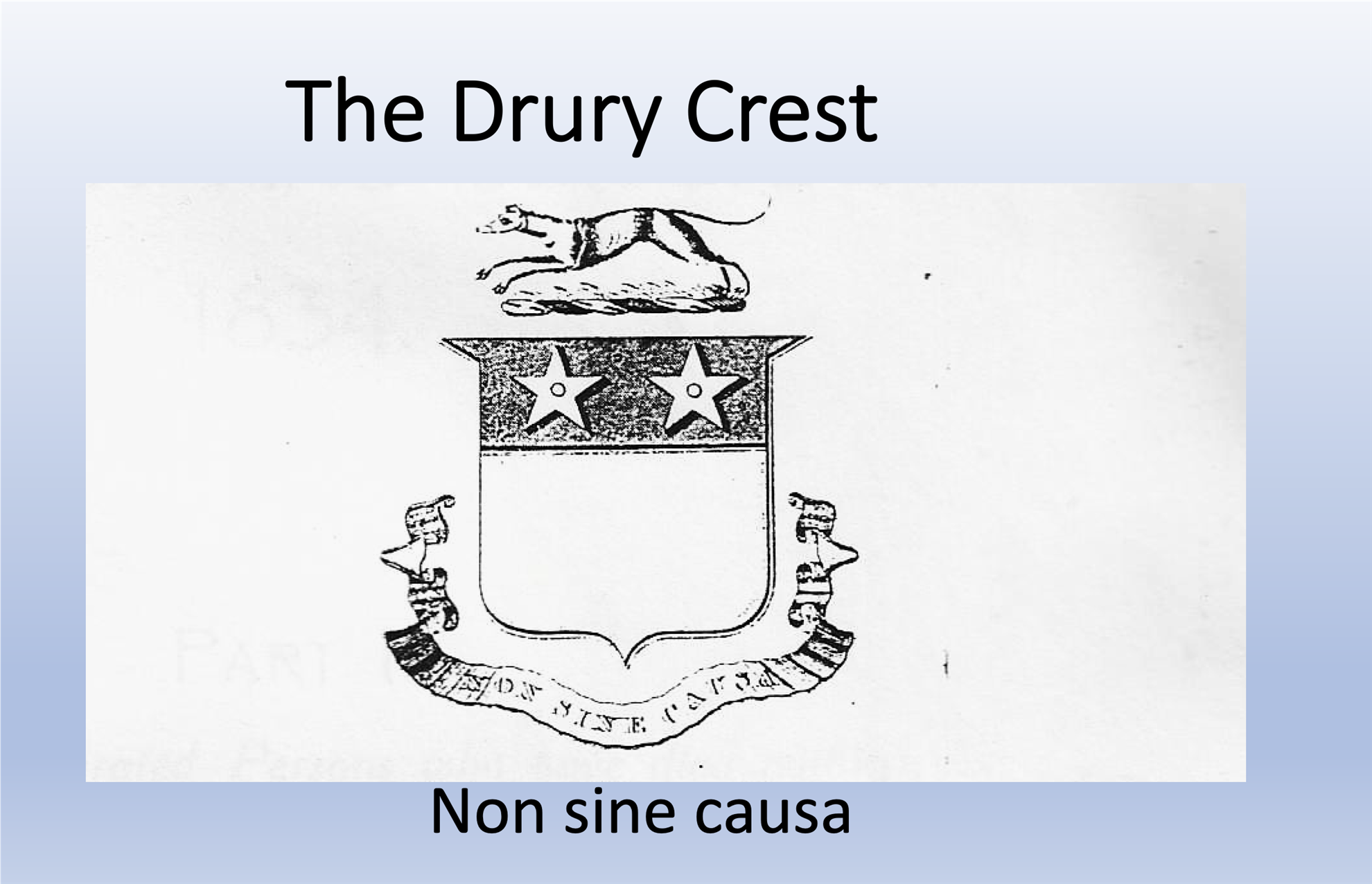 Drury (meaning love) probably came from French de Rouvray. Documents reveal that the original Drury was of minor nobility who came over with William the Conqueror as a King’s messenger in 1066. We have a coat of arms with a greyhound courant (running) representing “speed” and a motto that translates as “not without cause”.
Drury Lane in London was the thoroughfare leading to Drury House. The house is long gone, though the famous lane remains but very regrettably no Drury real- estate holdings do.
Landed gentry figure largely, where the eldest son inherited the title and the estate and the youngest son went into the Church. The Rev. Dr Joseph Drury was headmaster of Harrow School and Rev. Charles Drury at Eton was the private tutor to a William Denison. This lad, who later as Sir William became the Governor of colonial Tasmania and New South Wales, clearly impressed the Reverend and my great-grandfather, grandfather, father, son and grandson all have Denison as their middle name. Fort Denison, a noted landmark in Sydney Harbour, also became known as Pinchgut Island as Sir William apparently was a humourless disciplinarian.
My story begins when my father as a young graduate doctor from Melbourne Uni left for London in 1938 for post-graduate studies in surgery. WW2 started, Dad met my mother, a senior nursing sister in the military hospital system, and wasted no time in marrying her. In June 1941, to celebrate the end of the London blitz, I was born a Cockney.
When the European war ended in May 1945, my father became a ship’s doctor for Australian troops going home and we arrived in time for Dad to spend the remaining months of the Pacific war treating soldiers coming out of that horrific arena. He understandably developed a serious prejudice about anything Japanese – radios, TVs, cars. Imagine his emotions when Jane and I hosted several Japanese Exchange students in the 1990s.
Originally settling in Albert Park, I was sent from age 7 to 9 as a boarder to the Scotch College Junior School in Hawthorn. Cold showers and tough love made me the man I am today.
In 1950 the family moved to Ballarat where Dad was the senior surgeon at the hospital and had a broad general practice as well. I finished my school days very happily at Ballarat College before coming down to Melbourne Uni to study Architecture. I was resident in Ormond College, like my father before me in the 1930s.
Dad held the record for the quickest completion of the Ormond College Honours Course, which was to have lunch in College Hall before setting out to have a beer in every pub down Swanston Street and then every pub back up Elizabeth Street to College in time for dinner. In those days, that was a lot of pubs .I don't remember trying to emulate this record but that's maybe because I did.
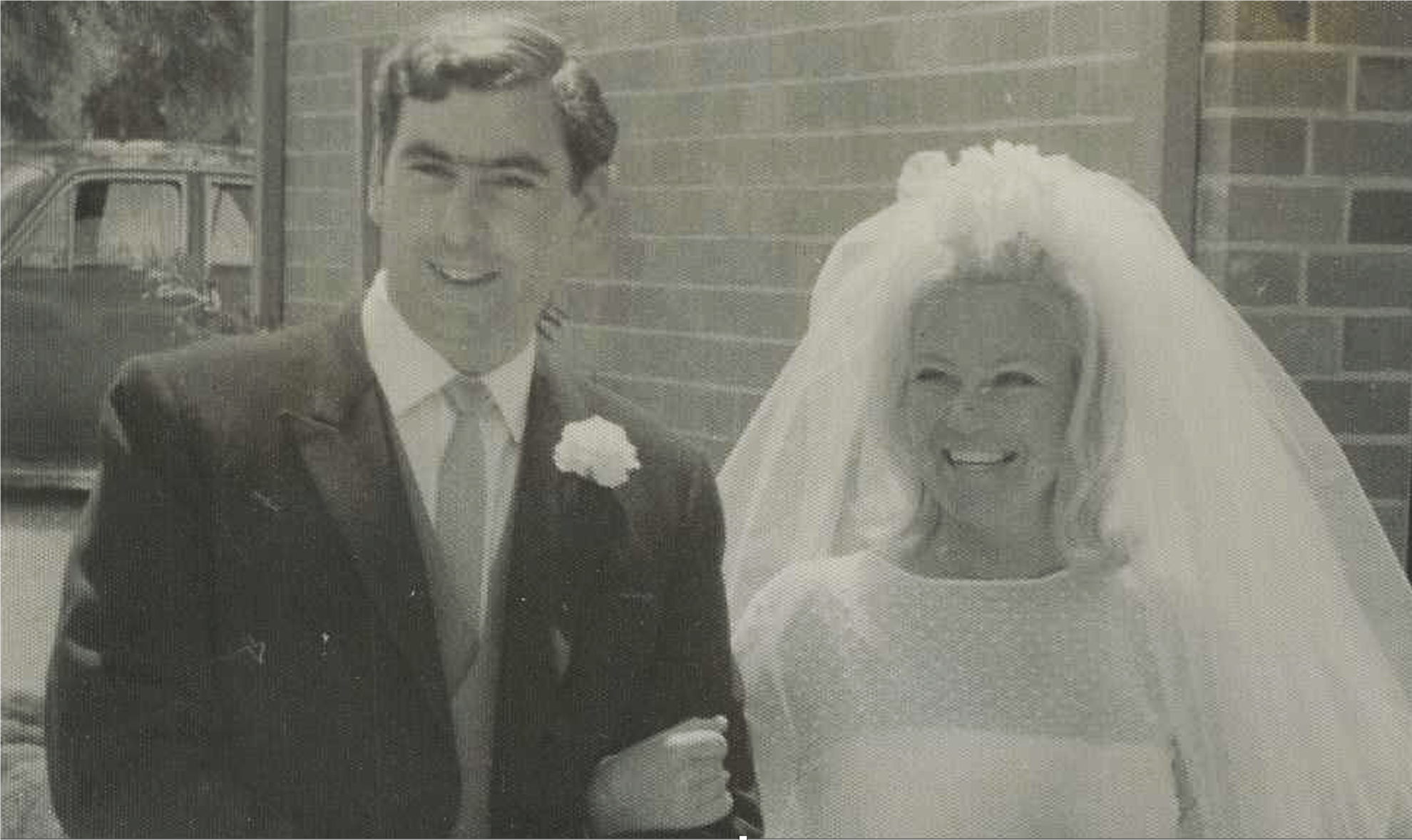 Ormond was directly opposite University Women’s College where a popular little blonde sheila called Jane Hillhouse was in residence, studying Arts Hons and DipEd. I am very happy to say my persistence wore her down and she has put up with me for over 55 years since our marriage in 1968.
After uni we bought and renovated a ruined terrace in North Carlton where Jane produced two amazing children, our beloved son, Simon, who very sadly died 14 years ago, and Mandy, who we identified earlier as the primary cause of all this Rotary stuff.
In 1977 we built the home in Wattle Rd, Hawthorn, in which we still live, which was not accidentally exactly equidistant between Scotch and MLC where the kids went to school.
 Early in my career I was invited to be one of the 4 on-site architects for Doncaster Shopping Town on land which in 1968 was all hilly orchards. Frank Lowy, the boss of Westfield, called us together for the client briefing which very simply was “Gentlemen, don’t give me no architecture. I want the mall should be a mess”. That meant no clinical straight lines in the shopfronts and signage with lots of colours, with the mall looking like a real village main street shopping strip.
The complex was built in record time and what an unforgettable pressure- cooker experience that was for a young architect!
Next came 15 years in partnership, followed by time in the corporate world of the long lunch and general consulting. I have been in the industry long enough to see a good many of my buildings demolished: some should never have been built while the loss of others saddened me a little.
Now, on to Rotary.
Immediately after my induction, President John Carre Riddell suggested that as Hawthorn was the host club for a Brazilian Exchange student arriving in a few days, Jane and I be the first host family for at least the next three months. With Mandy about to leave for Belgium for a year, why not?
We picked Carla (left) up from the airport and after some long silences in the car (she spoke little English) she eventually asked “What do I call you? Mum and Dad?" We are still mum and dad on emails that we regularly receive from her, now a doctor and a divorced mum in Brazil. She was a feisty girl whom we loved but she got feistier as time went on and later host families like the Shores had their moments with her.
Early in 1992 Mandy returned from Belgium to begin studies at Melbourne Uni. She also was elected to be the president of Rotex – a group of returned exchange students who assisted in the preparation of outgoing students, the settling back of returnees and helping the overseas students.
I'm certain Amanda’s high profile in Youth Exchange led to me being invited to join the District Youth Exchange Committee administering the program, which in those years had 30 to 40 students out and the same number in from at least 12 countries, and was very popular with most clubs.
However, dealing with so many students and clubs, here and overseas, their families and regulations, was not always easy and it was almost a full-time job. In fact, that Committee itself became family, working together and, let’s be honest, having a great time socially, and some of our closest Rotary friends come from those times.
Anne Scott, who we had known since Mandy was a Brownie in Anne's troop, became a much-valued member of the committee as well as being on the way to being the world leader of the Baden Powell Society.
After 3 years in the Youth Exchange Committee ranks and one year as Vice Chairman, I became Chairman for the next 3 years, finally stepping down in 2000.
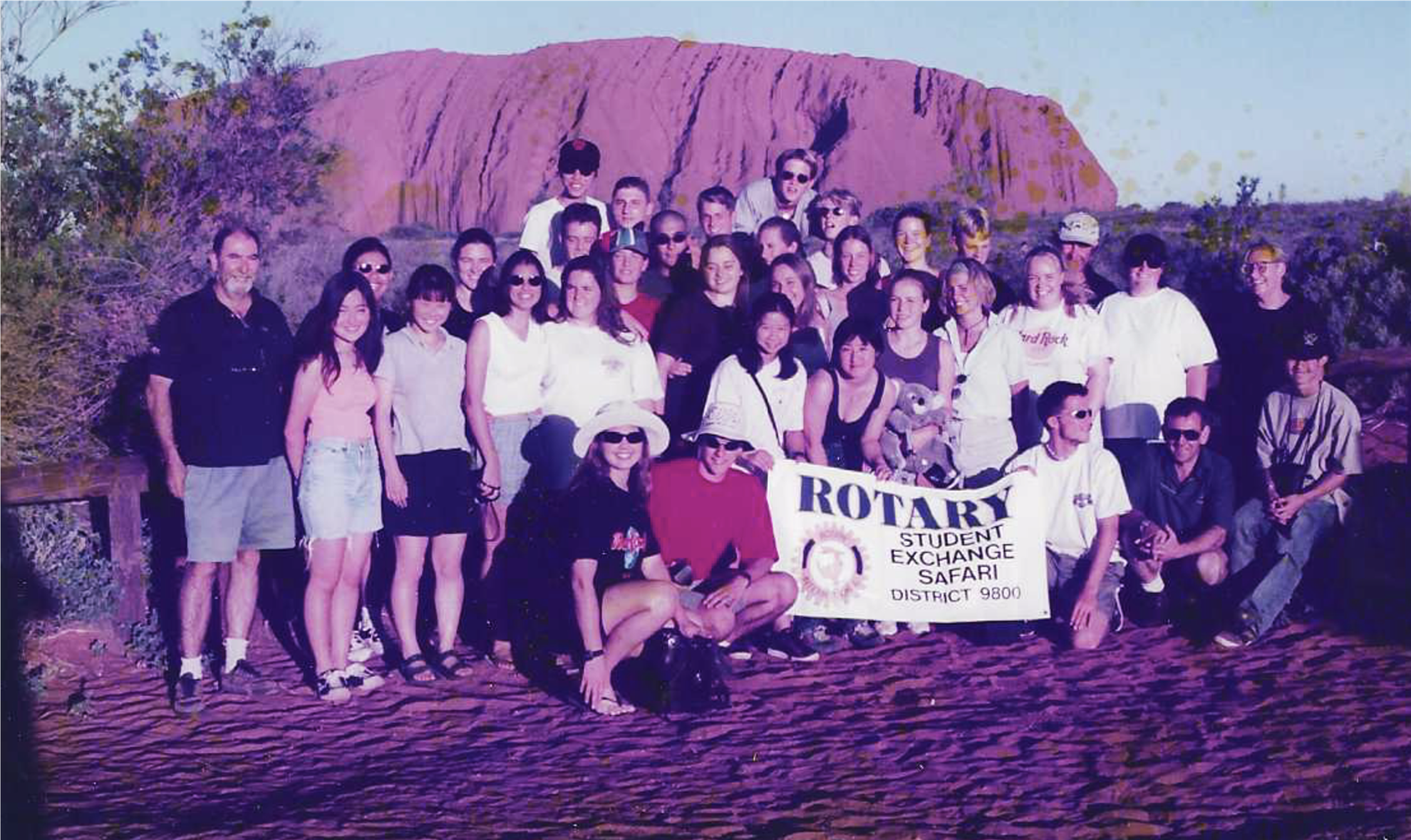 One of the highlights of the program for the inbound students was the 3 weeks under-canvas safari around Australia, mainly in the outback. Jane and I with two other Rotarians were leaders 4 times, travelling at close quarters in primitive conditions with 30-40 teenagers. Enormous fun and never a dull moment. We stayed in exotic places such as underground Cooper Pedy, Alice Springs, Darwin, Kakadu, Mt Isa, Townsville and even Canberra and enjoyed them all.
On the downside, it wasn't easy having to explain some of the degrading aspects of the very visible and unedifying scenes of life in and around some indigenous communities.
It was beginning to be frowned upon but still OK to climb Ayers Rock/Uluru and most of the kids did so with great enthusiasm. Interestingly an Aboriginal guide we talked to said Uluru wasn't sacred to his local mob, which instead revered a waterhole 30km away.
At the end of my involvement in Youth Exchange, as Jane will strongly endorse, the number of uncommitted hours in the day expanded hugely, but I was not really looking for something else to do. We were after all both working full-time.
But in mid-2001 PDG David Rosback said why don’t I apply to be GSE Team Leader for the outgoing team to Canada and the USA, and this shaped much of my Rotary life for the next 6 years.
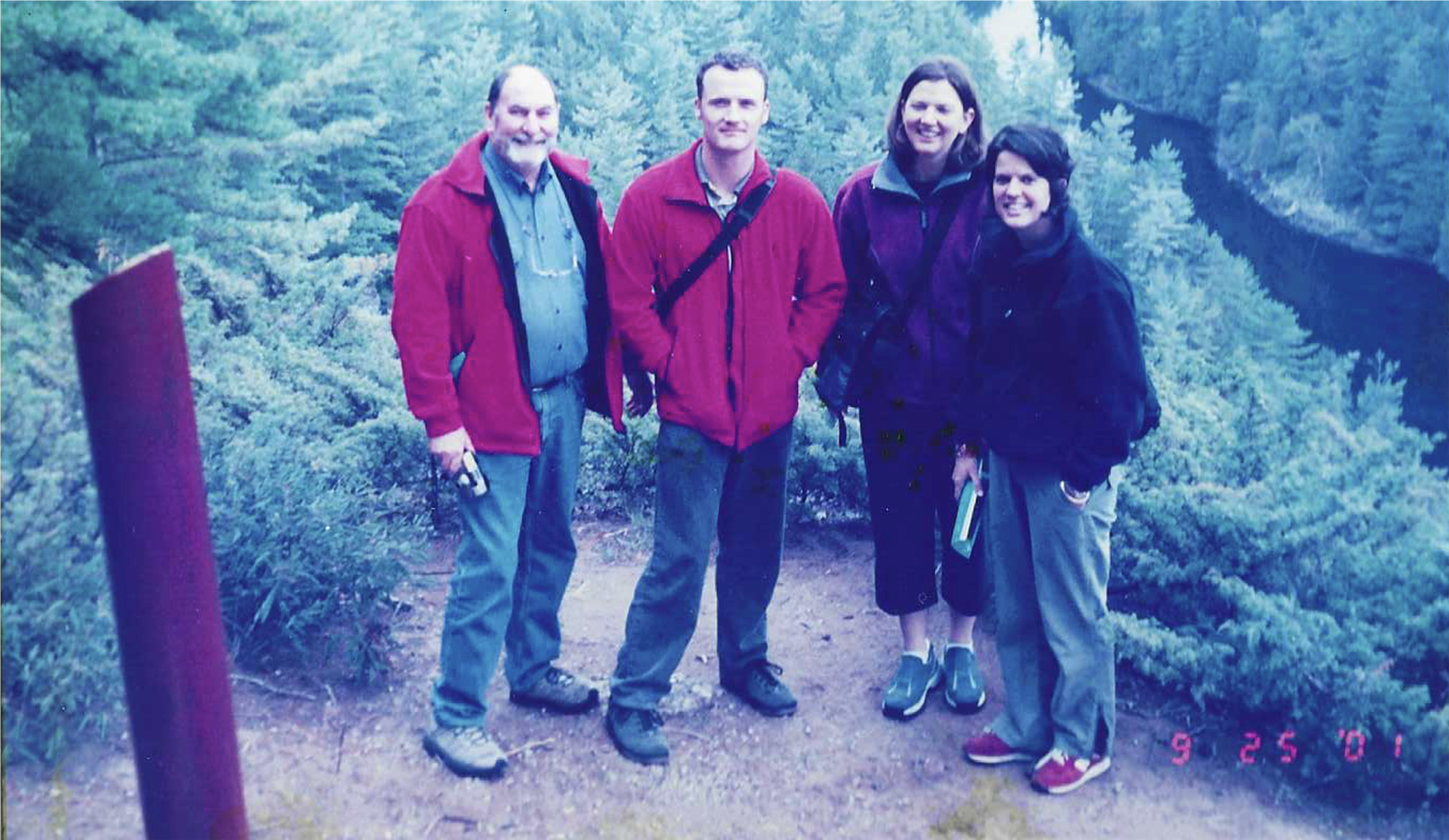 Group Study Exchange, GSE for short, was an annual international Rotary exchange for small teams of post-graduates to spend about 6 weeks gaining broader experience in their specialities.
The nominated fields for my group of four outstanding young people were Policing and Environment. The District for the Exchange was D7040, which covers part of Quebec and Ontario in Canada and Upper New York State in the USA.
After considerable preparations we were ready for our departure on the 12th of September. Then our first-leg transport collapsed - Ansett - followed closely by 9-11, and the US grounded all flights in and around the US. Have you seen “Come from Away”?
Many people thought it was too dangerous to travel but our intrepid team said let’s go if we can, despite reservations. District 7040 was pleading for us to come in defiance of the terrorists.
Without our Ansett flight, our committee managed to hire the last Tarrago available for us to drive to Sydney to board our somewhat delayed Air Canada flight, which amid the general chaos was broken by an unscheduled 24-hour stopover in Hawaii. Our ever-resourceful team enjoyed a sojourn on the beach in Waikikii before the US opened its airspace aain.
We eventually got to D7040 and the experiences the group had there were invaluable and fascinating. Just one amusing episode deserves telling. We were the guests at a French-speaking lunchtime club in Montreal and Cate, one of our Police members, stood up and said “Bonjour mesdames et monsieurs” then continued in English. After the lunch a Frenchman came up to her and said “If you cannot speak French properly, you should not speak it at all”! Don’t we all love the French?
Cate's husband Wayne is the current Chief Executive Officer of the Police Association of Victoria.
At the end of the GSE tour, Jane flew over to Montreal and together we drove down through New England in the Fall to spend a week in a very different, very sad, eerily quiet and still smoking New York City.
I remained on the GSE Committee for the next 6 memorable years. Memorable because they gave me the opportunity to meet so many talented and committed young people in so many different fields. With so much doom and gloom in the press each day there is hope - lots of it.
The Club President for 2002-3 was Dennis Shore and he invited me to be the Club Secretary, an honour that I readily accepted. One highlight of that year was that following a closely run ballot about our meeting place, the club moved from the Hawthorn Football Club Rooms to Leonda by the Yarra. Chalk and cheese in setting and catering and some members still mourn the passing of the Hawthorn Footy Club sausages – food of heroes!
But the biggest honour in my Rotary life was to succeed Dennis as Club President in 2003-4, the year we celebrated our 50th birthday. And the club received 4 District awards in that year.
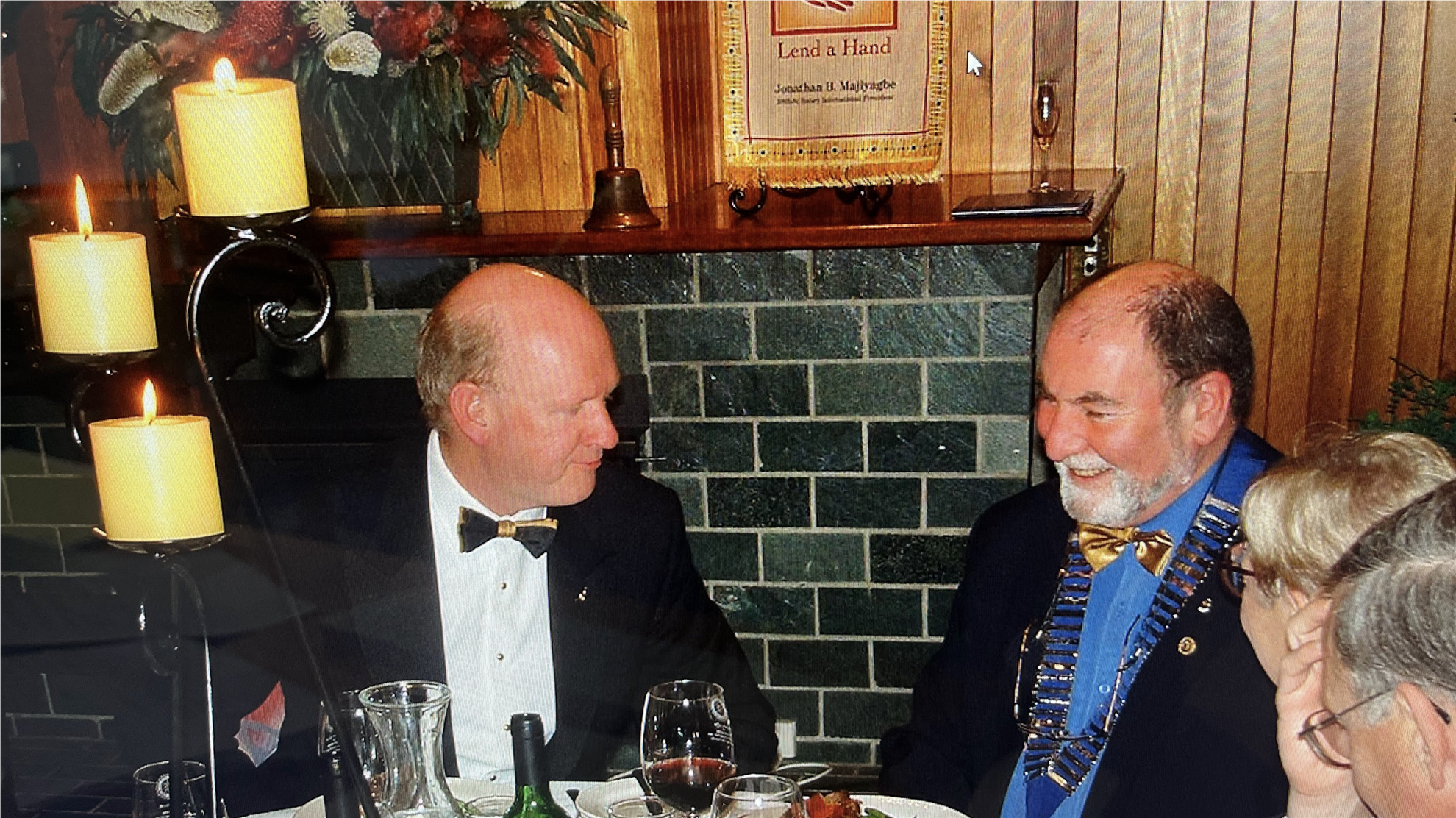
The birthday function was held in the Scotch College Cardinal room with 120 guests and the inimitable Campbell McComas (left) as guest speaker. Though Campbell was a bit grumpy when Jonathon Sear (right, below) as sergeant upstaged him as the comedian of the night. A fantastic night and next week we celebrate the 70th!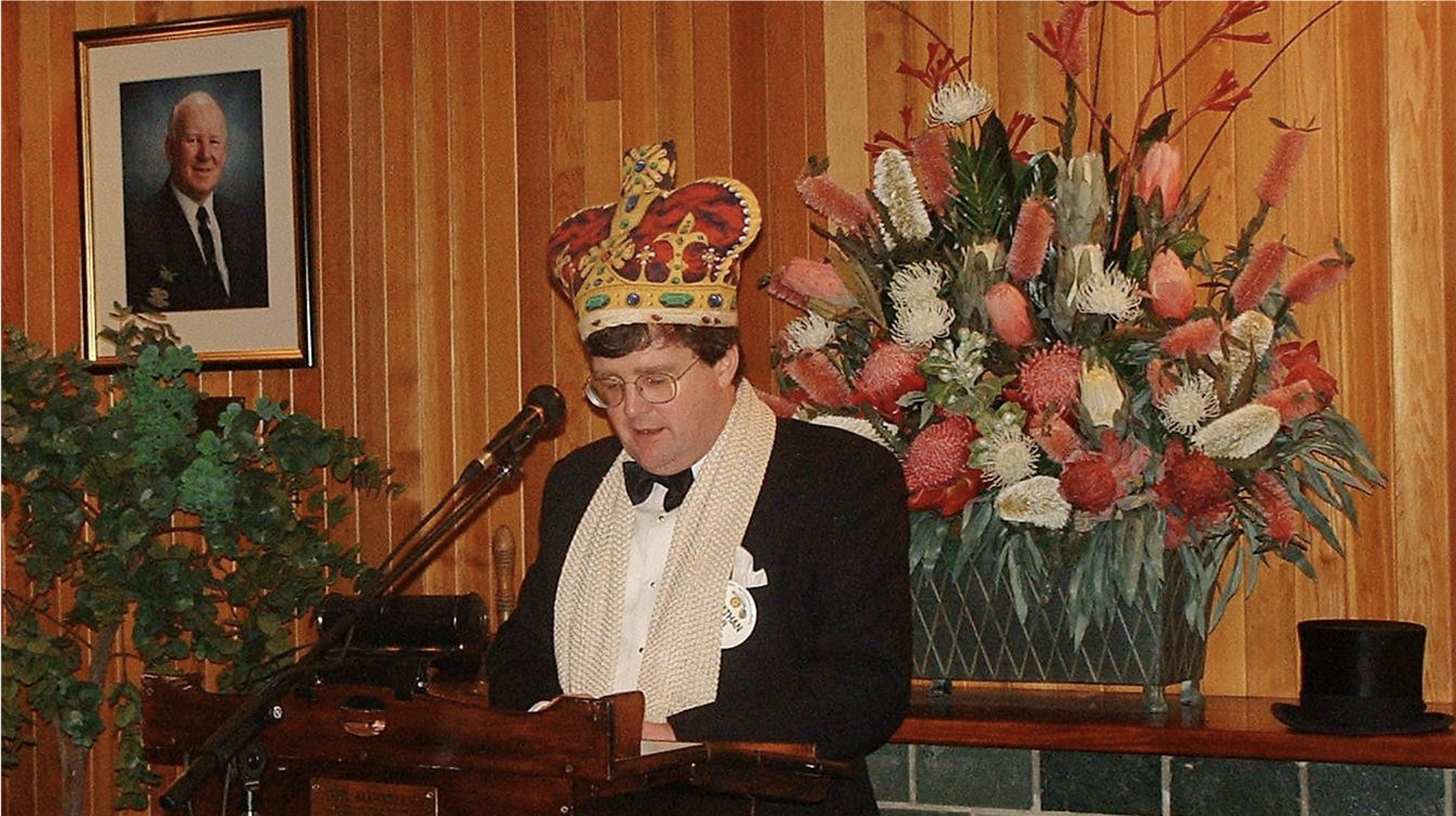
District Goveror for 2005-6, John Wigley, invited me to be District Chair of Club Service, a position I held for the next 2 years. I met many different and committed Rotarians who were running their clubs with the same basic Rotary rules but with so many different bewildering interpretations.
Moving along.
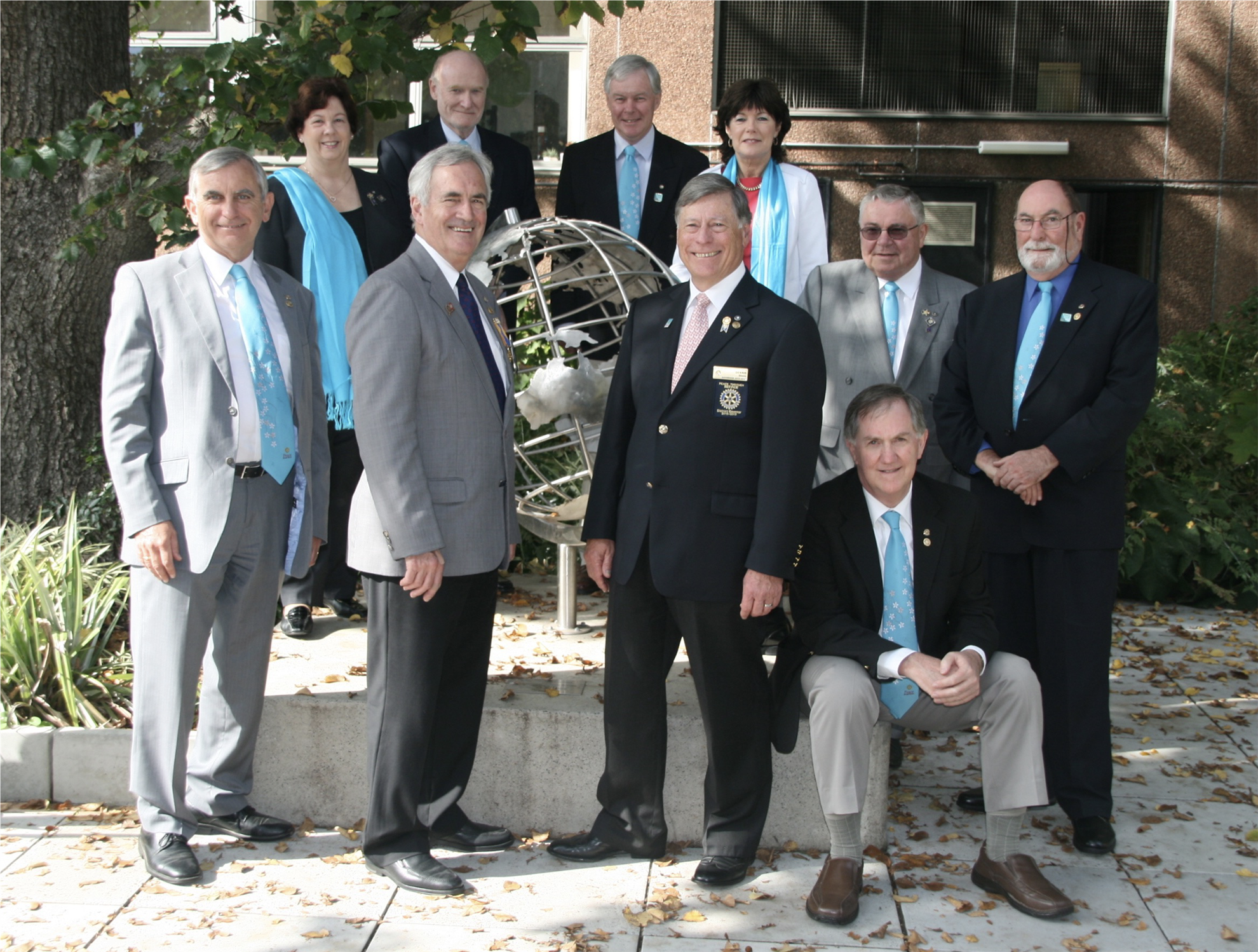 I became an Assistant Governor for 2010-11 and my Cluster was the 7 Heritage Clubs – Richmond, Collingwood, Fitzroy, Carlton, North Melbourne, Brunswick and Melbourne Park. The first 6 were some of the oldest clubs in the District, a few just surviving on life support. Melbourne Park had only been chartered for 2 months with all 31 members being under the age of 30, and they were a dynamic lot who did things differently.
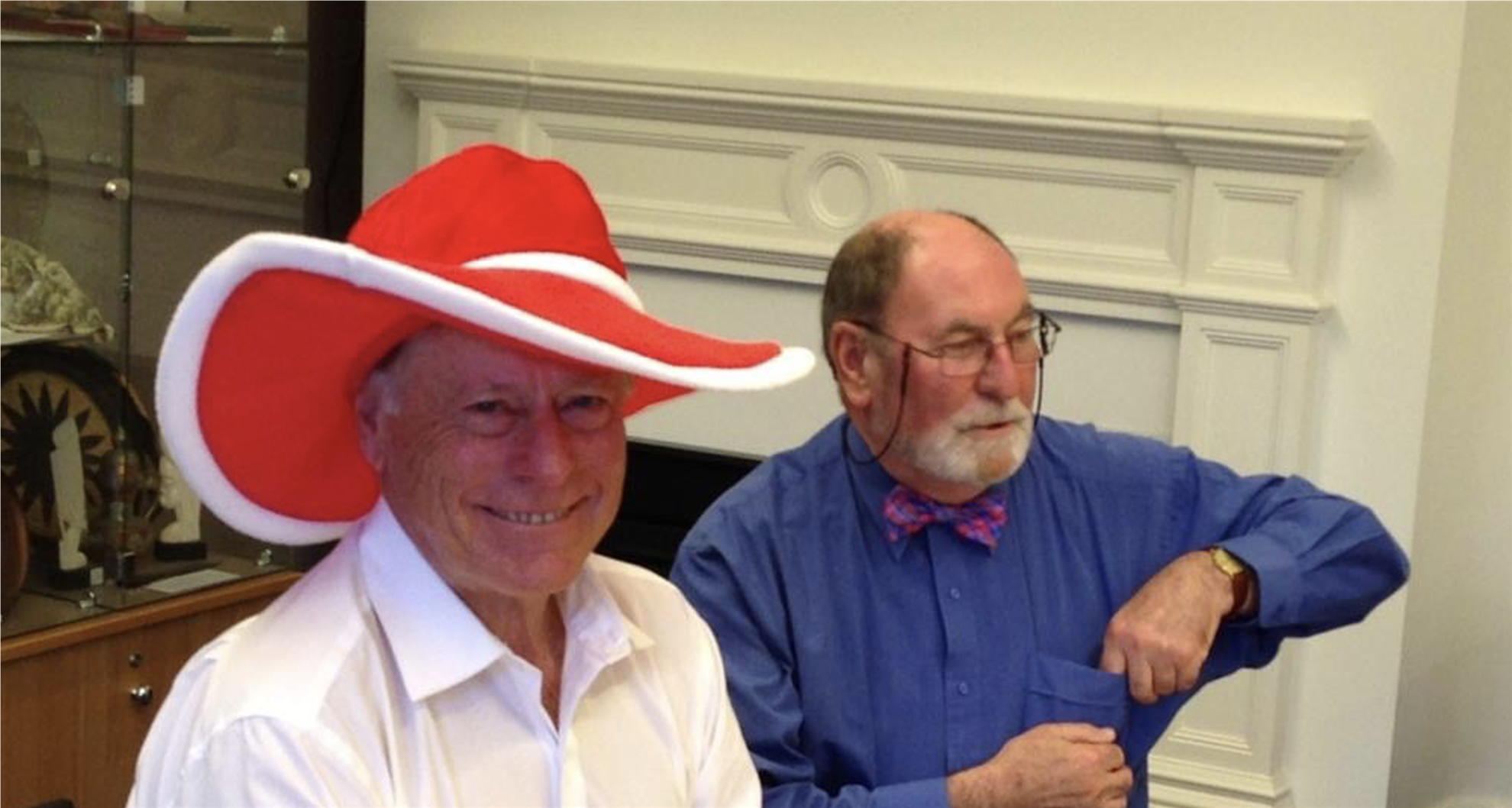
I was just getting into AG stride when Dennis Shore as District Governor Elect Nominee invited me to be the District Secretary for 2012-13. That meant stepping down as AG and becoming assistant secretary for a year in training for the big one. Training of course included attending meeting after meeting and taking the minutes, which in many instances yet again proved the power of the pen: if it was written down, the reader thinks I must have said it.
Dennis’s year was by any standards a great one with many successes, but not without having to wrangle 70-odd clubs, not always on District’s side. But I like to think I was working with Dennis for the common cause and also as good friends. Thank you, Dennis.
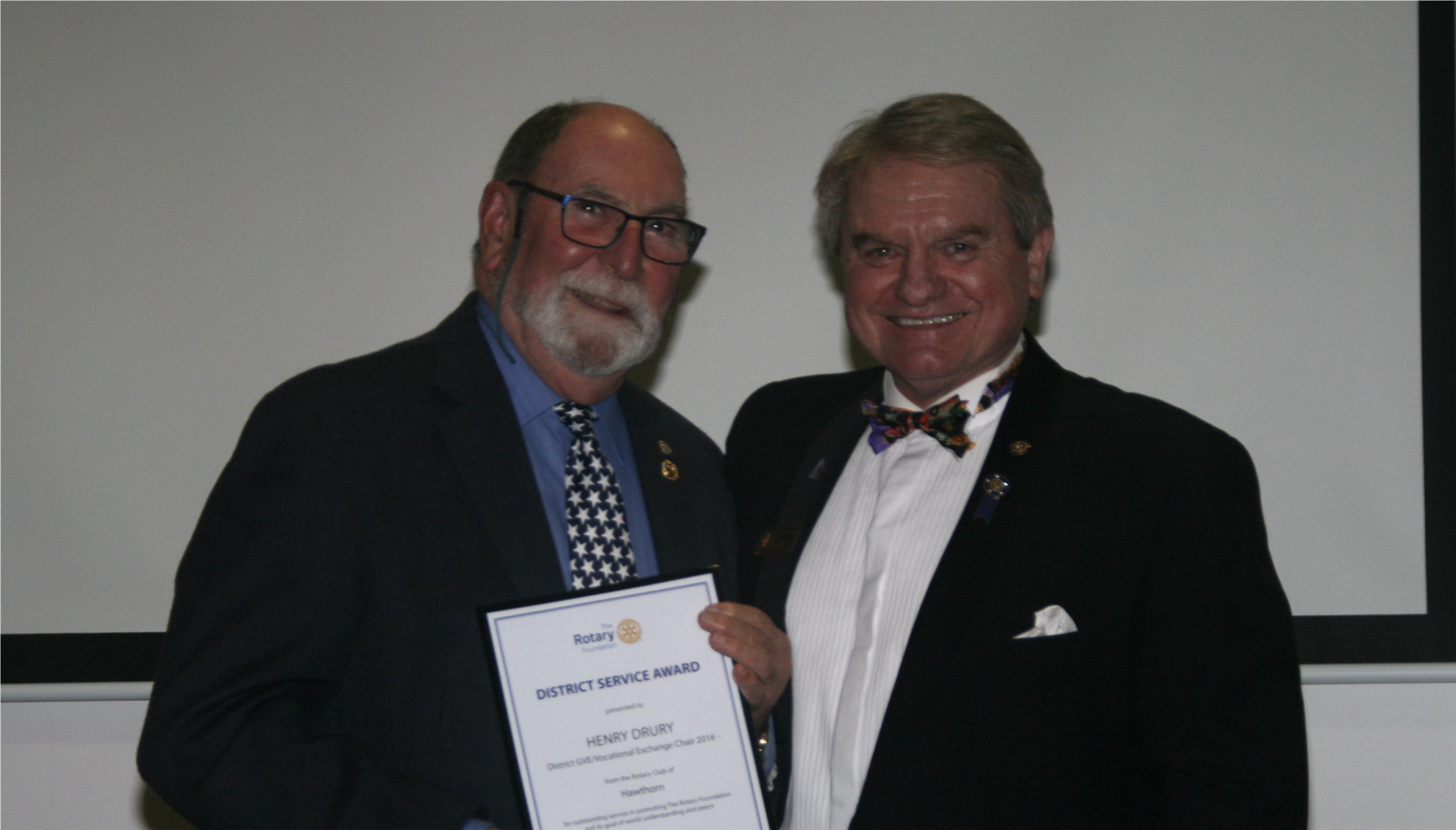 I suppose because of my deep involvement with Youth Exchange I was tagged a youthy person, and so over time and often part-time only, served with the District committees for RYLA, RYPEN and Ambassadorial Scholars, as well as mentoring hopefuls at club level. Jane and I spent a week living in as Uncle and Aunt with the NYSF students at the National University campus in Canberra.
I also served on the Club board from time to time as director of Youth, Club Service, International and Foundation.
A stint writing cameos on the quirky history of each club in the District for The Networker filled in many hours during the COVID lockdown.
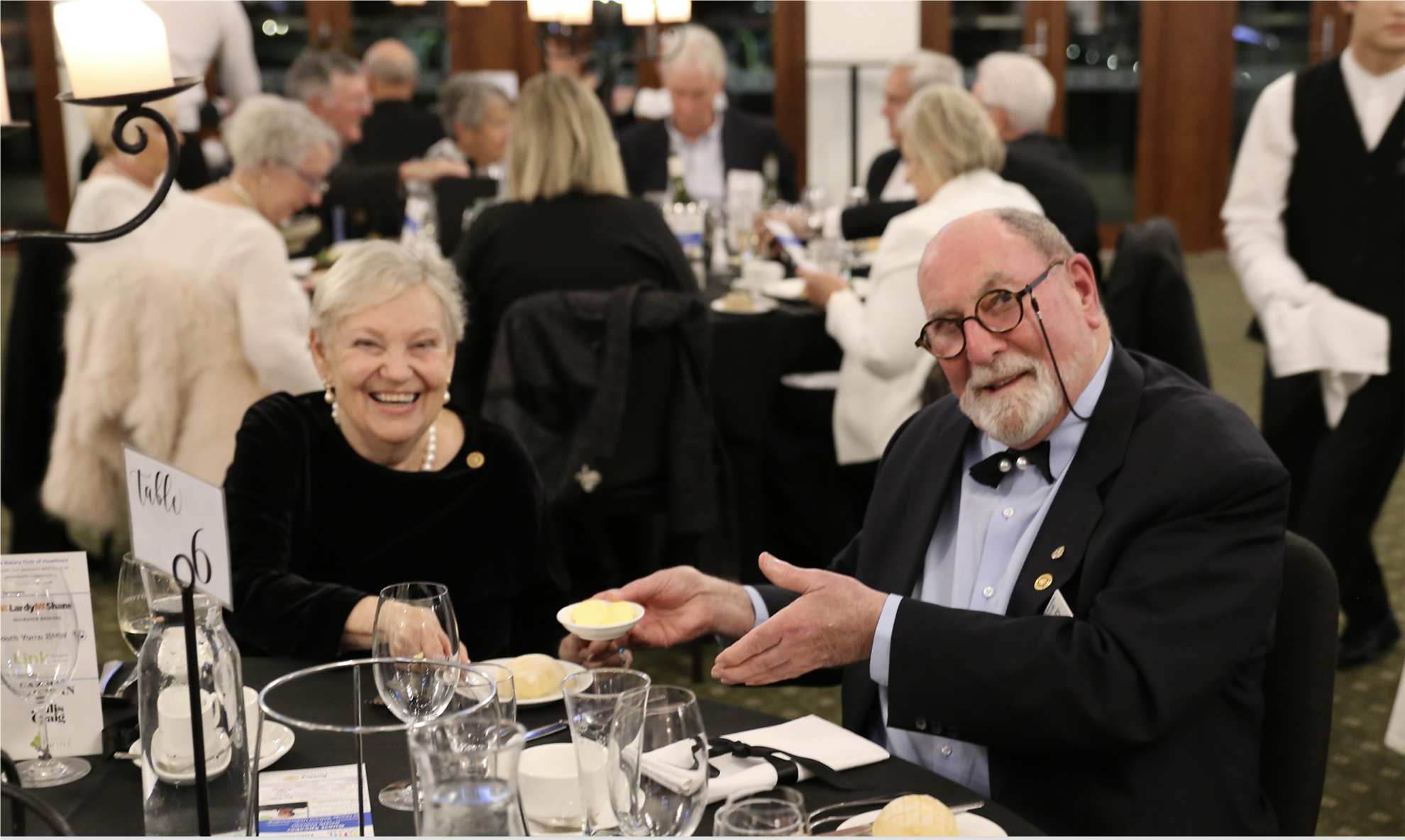 In conclusion. None of this would have happened without the total support of Jane, who, although a member only for the last couple of years, was as committed as any member in her contribution to the club for the first 30 years. Wise words to keep me under control, editing, hands-on club projects, hosting 7 Exchange students and much, much more.
Because of Jane's love of travel, we have over the years visited 48 countries – some only briefly and others several times. So thank you, Jane, for those experiences, including camel safaris where you dug your own toilet, and a 5-day very uncomfortable trip down the Ganges in a small wooden fishing boat and camping on the sandbanks under the stars. Just a taste. Talking of taste, I have been made to eat some very strange foods – all part of the deal, stoically endured.
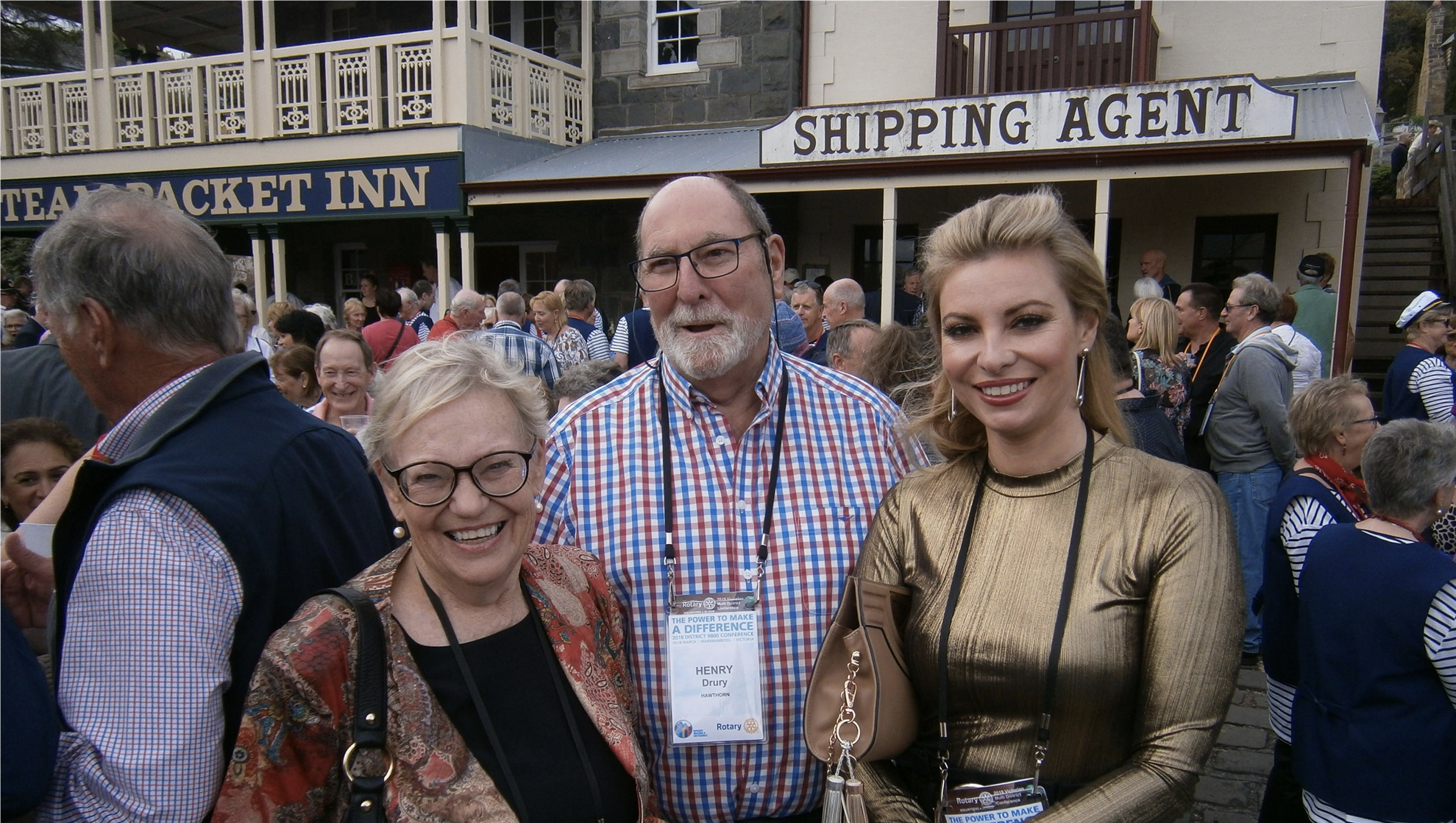
 And Mandy, despite her Fine Arts and Languages degree, has been for many years an anchor with CNBC worldwide television and has kept up her Rotary involvement wherever she's been in the world, particulary MCing major events, including the Warrnambool Conference and a major session at the recent World Convention here in Melbourne.

Henry fielded questions from the audience about Youth and Group Study Exchange, and was thanked by PDG Dennis Shore, in particular for his contribution to Rotary District 9800.
President Doug McLean added his thanks to the MC, and to Henry for his good work for Rotary over the years.