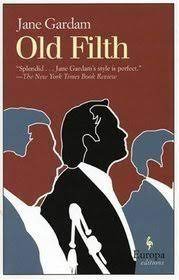
The Bookworms met on Monday to discuss “Old Filth” by Jane Gardam.

What a name for a book, let alone a respected person!  How did it come about?

Goodreads explains:

Sir Edward Feathers has had a brilliant career, from his early days as a lawyer in Southeast Asia, where he earned the nickname Old Filth (FILTH being an acronym for Failed In London Try Hong Kong) to his final working days as a respected judge at the English bar. 

Yet through it all he has carried with him the wounds of a difficult and emotionally hollow childhood. Now an eighty-year-old widower living in comfortable seclusion in Dorset, Feathers is finally free from the regimen of work and the sentimental scaffolding that has sustained him throughout his life. He slips back into the past with ever mounting frequency and intensity, and on the tide of these vivid, lyrical musings, Feathers approaches a reckoning with his own history. Not all the old filth, it seems, can be cleaned away.

Borrowing from biography and history, Jane Gardam has written a literary masterpiece reminiscent of Rudyard Kipling's Baa Baa, Black Sheep that retraces much of the twentieth century's torrid and momentous history. Feathers' childhood in Malaya during the British Empire's heyday, his schooling in pre-war England, his professional success in Southeast Asia and his return to England toward the end of the millennium, are vantage points from which the reader can observe the march forward of an eventful era and the steady progress of that man, Sir Edward Feathers, Old Filth himself, who embodies the century's fate.

Old Filth was nominated for the 2005 Orange Prize.
 

The Bookworms enjoyed reading and discussing this book, which skipped through the decades of Sir Edward Feathers’ life. It reflected on the British who worked overseas, but always returned “home” in retirement. They sent their children to British schools, usually as boarders or farmed out to friends or relatives: the children as a result grew up between Britain and The Empire. 

We enjoyed the glimpses into Feathers’ early life, his legal rivalry with Terry Veneering and a peek into the emotional triangle of Feathers, his wife Betty and Veneering. There is also a murder in the story: we felt it is glossed over because the old bag deserved what she got.

Lawrence questioned that Feathers’ friends would refer to him as “Old Filth”, while Ginia and Jane were horrified by the brutality of the foster parents. 

We gained little insight into Feathers’ feelings, and wondered if he had any at all, or had built a protective wall around himself. How to find out?  

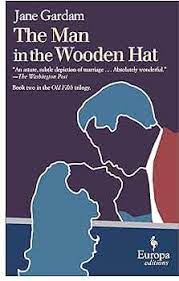
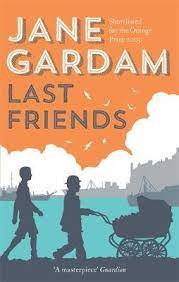
Easy: Charlotte suggested we read the sequels!  “The Man in the Wooden Hat” explains Feathers’ friendship with Chinese Albert Ross (Albatross) and puts some meat on the bones of his marriage to Betty, and her relationship with rival Veneering.  The third in the trilogy, “Last Friends” covers Feathers’ retirement in England with Veneering as a neighbour and explains some fringe characters such as lawyer Fiscal-Smith.

In all, we enjoyed “Old Filth”, and recommend it to you. Those who had read the sequels encouraged others to follow-up. 


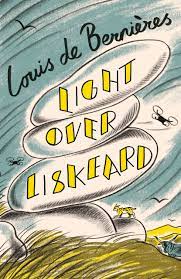
For the Bookworms next read, we have chosen: “Light Over Liskeard” by Louis de Bernieres. This is a novel poking fun at modern mores and delving into what we should really treasure in our precarious lives. 


For your holiday reading, The Bookworms suggest these three books:

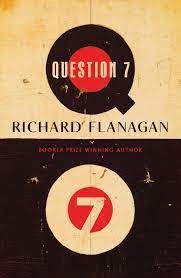
"Question 7" by Richard Flanagan. Beginning at a love hotel by Japan’s Inland Sea and ending by a river in Tasmania, Question 7 is about the choices we make about love and the chain reaction that follows.    

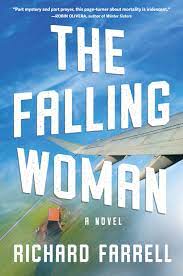
"The Falling Woman" by Richard Farrell. First, it’s just a barely believable rumour: one person may have survived the midair explosion of a passenger jet on a cross-country course from Washington, DC, to San Francisco. But soon she becomes a national media sensation when “the Falling Woman,” as the press dubs her, is said to have been taken to a Wichita hospital—and then to have disappeared without a trace.

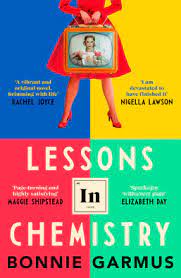
"Lessons in Chemistry" by Bonnie Gramus. Chemist Elizabeth Zott is not your average woman. In fact, Elizabeth Zott would be the first to point out that there is no such thing as an average woman. But it’s the early 1960s and her all-male team at Hastings Research Institute takes a very unscientific view of equality. Except for one: Calvin Evans; the lonely, brilliant, Nobel–prize nominated grudge-holder who falls in love with—of all things—her mind. True chemistry results.

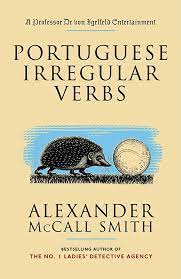
"Portuguese Irregular Verbs" by Alexander McCall Smith

This is a short comic novel and the first of his series of novels featuring Professor Dr von Igelfeld. Some consider the book to be a series of connected short stories.